
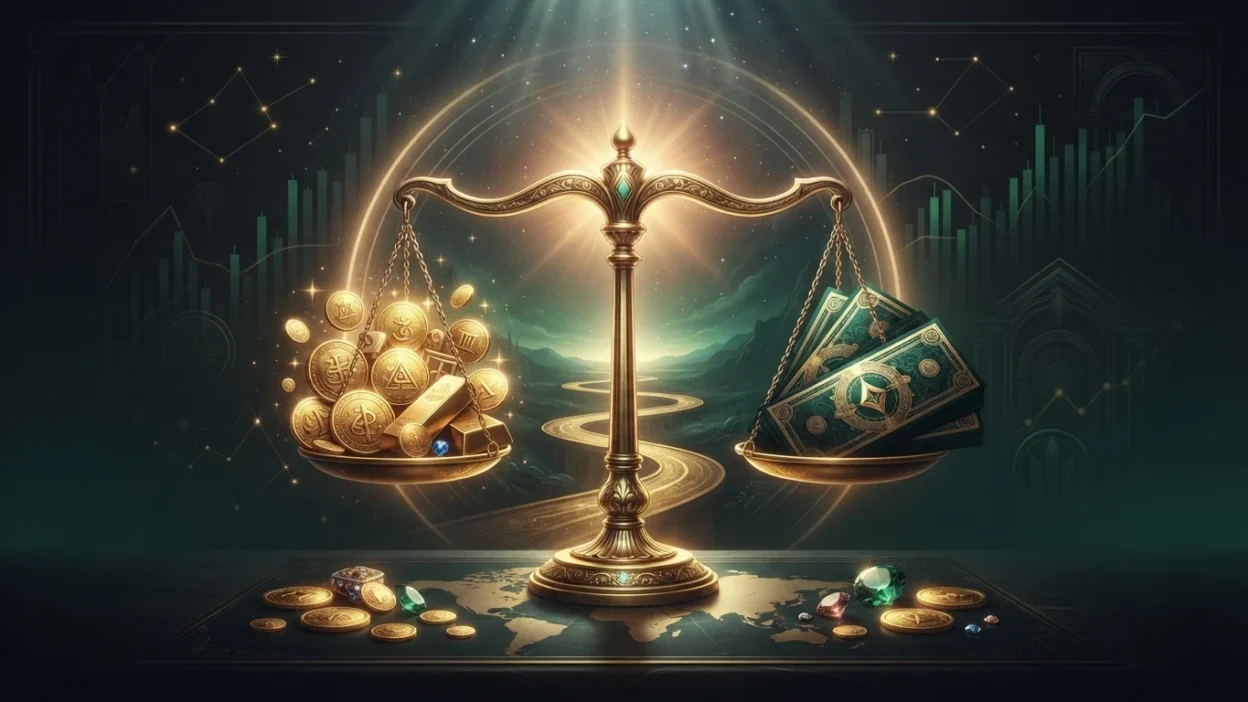
Money is more than a tool for buying and selling. Across cultures, money symbolism often represents value, security, power, freedom, success, opportunity, and even personal beliefs about abundance. Whether you see money in a dream, notice coins repeatedly, or explore its role in religion and art, its symbolic meaning can reveal how people understand wealth and worth.
The meaning of money symbolism depends heavily on context. A single coin may suggest luck or opportunity, while a pile of money can represent ambition, abundance, status, or fear of losing security.
Money Symbolism Meaning (Clear Definition)
Money symbolism refers to the symbolic meanings associated with money, coins, currency, wealth, and financial exchange. It commonly represents material value, personal worth, prosperity, power, security, freedom, and the exchange of energy or resources.
Money can symbolize both positive and negative ideas. It may suggest abundance and independence, but it can also represent greed, inequality, temptation, anxiety, or excessive attachment to material possessions.
Common Symbolic Meanings of Money
| Money Symbolism | Common Meaning |
|---|---|
| Wealth | Abundance, success, prosperity |
| Coins | Opportunity, luck, value, exchange |
| Paper money | Power, resources, status |
| Finding money | Unexpected opportunity or good fortune |
| Losing money | Fear, insecurity, change, or loss |
| Giving money | Generosity, support, responsibility |
| Receiving money | Recognition, reward, opportunity |
| Saving money | Security, preparation, stability |
| Spending money | Freedom, desire, enjoyment, or impulsiveness |
Because money carries different meanings for different people, its symbolism is best understood by considering the situation surrounding it.
What Does Money Symbolism Represent?
Money symbolism can represent several important aspects of human life.
1. Wealth and Prosperity
The most obvious association is abundance. Money can symbolize financial success, comfort, growth, and the ability to provide for yourself or others.
2. Personal Value
Money is often connected with the idea of worth. Symbolically, it can raise questions about how people measure their own value and how society measures success.
3. Power and Influence
Financial resources can create access, influence, and authority. For this reason, money symbolism frequently appears alongside themes of social status and control.
4. Freedom and Independence
Having enough resources can represent freedom from dependence and the ability to make personal choices. Money may therefore symbolize independence and control over one’s direction in life.
5. Exchange and Relationships
Money changes hands between people. Symbolically, this makes it a powerful representation of exchange, trust, obligation, generosity, and reciprocity.
6. Fear and Insecurity
Money does not always symbolize abundance. A shortage of money can represent uncertainty, vulnerability, stress, or fear about the future.
Spiritual Meaning of Money Symbolism
The spiritual meaning of money symbolism often focuses less on physical wealth and more on values, intention, gratitude, responsibility, and abundance.
In many spiritual traditions, money itself is not necessarily viewed as good or bad. Instead, the way a person obtains, uses, and relates to money can carry deeper significance.
Money may symbolize the energy of giving and receiving. Generosity can represent compassion, while receiving may symbolize openness to support and opportunity.
Money symbolism can also encourage reflection on attachment. If wealth becomes the central measure of happiness, it may represent an imbalance between material desires and inner fulfillment.
Money as a Symbol of Abundance
Spiritually, abundance can mean more than financial wealth. It may include love, friendship, knowledge, creativity, opportunities, time, and meaningful experiences.
This broader interpretation encourages people to see prosperity as something that can exist in many forms.
Biblical / Religious Meaning of Money Symbolism
Money has a complex role in religious symbolism. In biblical and religious traditions, wealth can represent provision and blessing, but attachment to wealth can also become a warning about misplaced priorities.
The Bible contains many teachings about generosity, stewardship, charity, debt, wealth, and the treatment of others. A recurring theme is that material possessions should not become more important than spiritual values.
The symbolism of money can therefore involve stewardship, responsibility, generosity, temptation, and moral priorities.
A well-known biblical teaching warns about the dangers of serving wealth rather than treating it as a resource. This does not simply make money a negative symbol; instead, it emphasizes the importance of how wealth is valued and used.
In Christianity and other religious traditions, giving money can also symbolize charity, sacrifice, compassion, community support, and devotion.
Money Symbolism in History and Culture
Money has played an important symbolic role throughout human history.
Early forms of money included objects such as shells, beads, metals, and other items that communities recognized as valuable. Coins later became powerful symbols of rulers, governments, trade, identity, and authority.


Coins often carried the images, names, and symbols of political leaders. This made currency more than a medium of exchange—it became a way to communicate authority and cultural identity.
Gold and silver developed especially strong symbolic associations with wealth and permanence. Their rarity and durability helped them become cultural symbols of prosperity, prestige, and power.
Different societies have also developed traditions involving coins. Coins may be placed in fountains for wishes, carried as good-luck objects, given as gifts, or included in ceremonies to represent prosperity and good fortune.
Money Symbolism in Literature and Art
Money is a powerful symbol in literature because it can reveal character, social class, desire, conflict, and moral choices.
A wealthy character may represent privilege or influence, while a character struggling financially may represent hardship, inequality, or resilience. Money can also become a source of conflict between families, friends, romantic partners, or social groups.
In art, currency and coins can symbolize consumerism, capitalism, status, greed, inequality, and the relationship between material possessions and human identity.
Artists may deliberately display money alongside luxury objects or everyday possessions to question what society considers valuable.
Literature and art therefore often use money symbolically rather than simply as a physical object. It can become a mirror of human desires and social values.
Dream Meaning of Money Symbolism
Dreams about money are common and can have many interpretations. Money in dreams may symbolize value, confidence, opportunity, security, power, or fear of loss.
The specific action in the dream matters.
Finding Money in a Dream
Finding money may represent discovering an opportunity, recognizing an overlooked talent, or experiencing an unexpected sense of personal value.
Losing Money in a Dream
Losing money may reflect insecurity, fear of failure, uncertainty, or concern about losing something important.
Receiving Money in a Dream
Receiving money can symbolize recognition, support, reward, confidence, or a new opportunity.
Giving Money in a Dream
Giving money may represent generosity, emotional investment, responsibility, or the desire to help someone.
Counting Money in a Dream
Counting money may suggest careful evaluation of resources, priorities, responsibilities, or personal achievements.
Dream symbolism is highly personal, so these interpretations should be viewed as possibilities rather than fixed predictions.
Modern Meaning of Money Symbolism
In modern society, money symbolism is closely connected with career success, lifestyle, independence, social status, and personal identity.
Social media has also influenced how people perceive wealth. Luxury goods, expensive experiences, and financial achievements are often presented as visible signs of success.
At the same time, modern conversations increasingly question whether financial wealth should be the main measure of a successful life.
Money can now symbolize financial freedom, flexibility, security, entrepreneurship, achievement, and the ability to pursue meaningful goals.
For many people, the most powerful modern interpretation is not simply having more money, but having enough financial stability to make choices that align with personal values.
Money Symbolism and Personal Growth
Money can also become a symbol of personal development.
Learning to earn, save, spend, and give responsibly requires discipline and self-awareness. In this sense, money can represent lessons about patience, priorities, boundaries, and long-term thinking.
A healthy relationship with money does not necessarily mean pursuing wealth without limits. It can mean understanding what money is meant to accomplish in your life.
When viewed this way, money becomes a tool rather than the ultimate goal.
Positive and Negative Money Symbolism
Money has both light and shadow meanings.
Positive money symbolism may include:
- Abundance
- Prosperity
- Freedom
- Security
- Opportunity
- Generosity
- Achievement
- Independence
Negative money symbolism may include:
- Greed
- Fear
- Materialism
- Control
- Inequality
- Debt
- Envy
- Obsession
The surrounding context usually determines which interpretation is most appropriate.
Frequently Asked Questions About Money Symbolism
What is the main meaning of money symbolism?
Money symbolism commonly represents value, wealth, security, power, opportunity, freedom, and personal worth. Its meaning changes according to cultural and personal context.
What does money symbolize spiritually?
Spiritually, money can symbolize abundance, stewardship, generosity, responsibility, and the balance between material needs and inner values.
What does finding money symbolize?
Finding money can symbolize unexpected opportunities, good fortune, recognition, or discovering value that was previously overlooked.
What does losing money symbolize?
Losing money may symbolize insecurity, fear of loss, uncertainty, or concerns about control and stability. In dreams, the meaning depends on the emotions and circumstances involved.
Is money symbolism always about wealth?
No. Money can symbolize much more than financial wealth, including personal value, freedom, relationships, power, opportunity, responsibility, and emotional security.
Conclusion
Money symbolism reflects the many ways people understand value, security, power, opportunity, and abundance. From ancient coins to modern currency and dreams about finding or losing money, this symbol can reveal both material desires and deeper human concerns.
Ultimately, money is often most meaningful as a reflection of what we value. Its symbolism reminds us that true wealth can include not only financial resources, but also freedom, relationships, purpose, generosity, and peace of mind.