Desert symbolism has inspired people for thousands of years as a powerful representation of endurance, self-discovery, spiritual growth, and transformation.
Although deserts may appear harsh and empty, they often reveal hidden beauty, resilience, and hope.
Across cultures, religions, and literature, deserts symbolize life’s greatest challenges while reminding us that strength, wisdom, and renewal often emerge through difficult journeys.
Desert Symbolism Meaning (Clear Definition)
Desert symbolism refers to the deeper meanings associated with deserts beyond their physical landscape. Because deserts are vast, dry, and demanding environments, they commonly symbolize perseverance, solitude, purification, reflection, and personal transformation.
Unlike fertile landscapes that represent abundance, deserts remind us that growth sometimes happens during seasons of hardship, patience, and inner reflection.
Common Symbolic Meanings of Deserts
| Symbol | Meaning |
|---|---|
| Endurance | Strength through adversity |
| Solitude | Time for self-reflection |
| Transformation | Personal and spiritual growth |
| Faith | Trust during difficult seasons |
| Freedom | Independence and exploration |
| Purification | Letting go of unnecessary burdens |
| Resilience | Adapting to life’s challenges |
| Hope | Finding renewal after hardship |
What Does Desert Symbolism Represent?
Desert symbolism represents life’s challenges and the personal growth that comes from facing them with courage. Though deserts may seem barren, they teach resilience, patience, and appreciation for life’s essential blessings.
Deserts commonly represent:
- Inner strength
- Spiritual awakening
- Personal transformation
- Self-reliance
- Simplicity
- Patience
- Survival
- Hope beyond hardship
Their vast openness also symbolizes clarity, encouraging people to focus on what truly matters.
Spiritual Meaning of Desert Symbolism
Spiritually, deserts symbolize a place of testing, reflection, and renewal. Many traditions describe the desert as an environment where distractions disappear, allowing deeper faith and personal insight to develop.
Desert symbolism is often connected with:
- Spiritual purification
- Inner peace
- Trust in life’s journey
- Meditation and contemplation
- Emotional resilience
- Personal growth
- Faith through adversity
- Divine guidance
Rather than representing emptiness alone, the desert often symbolizes preparation for new beginnings and greater purpose.
Biblical / Religious Meaning of Desert Symbolism
The desert holds profound symbolic meaning throughout the Bible. It is often portrayed as a place where people encounter God, strengthen their faith, and prepare for important missions.
The Israelites wandered in the wilderness for forty years, learning trust, obedience, and dependence on God. Moses encountered the burning bush in the wilderness, and Jesus spent forty days in the desert praying and resisting temptation before beginning His public ministry.
These events make the desert a powerful biblical symbol of testing, spiritual growth, purification, perseverance, and divine guidance.
In many other religious traditions, deserts are also viewed as sacred spaces for solitude, prayer, discipline, and enlightenment.
Desert Symbolism in History and Culture
Throughout history, deserts have represented both challenge and opportunity.
Ancient Egypt
The surrounding deserts symbolized protection, mystery, and the boundary between civilization and the unknown.
Arabian Cultures
Deserts represent hospitality, endurance, courage, and survival. They have shaped traditions of resilience and community for centuries.
Indigenous Traditions
Many Indigenous peoples view deserts as sacred landscapes filled with spiritual meaning, ancestral stories, and respect for nature’s balance.
Asian Traditions
Some spiritual traditions associate deserts with simplicity, discipline, detachment, and inner enlightenment.
Modern Exploration
Today, deserts symbolize adventure, discovery, resilience, and humanity’s ability to thrive in even the harshest environments.
Desert Symbolism in Literature and Art
Authors and artists often use deserts to represent emotional journeys, spiritual searching, and transformation.
In literature, deserts commonly symbolize:
- Isolation
- Self-discovery
- Hope
- Perseverance
- Renewal
- Testing
- Freedom
- Inner strength
In visual art, sweeping sand dunes, endless horizons, and desert sunsets evoke feelings of silence, wonder, resilience, and timeless beauty.
Dream Meaning of Desert Symbolism
Dreaming about a desert often reflects emotional challenges, personal growth, or the search for purpose.
Common Desert Dream Interpretations
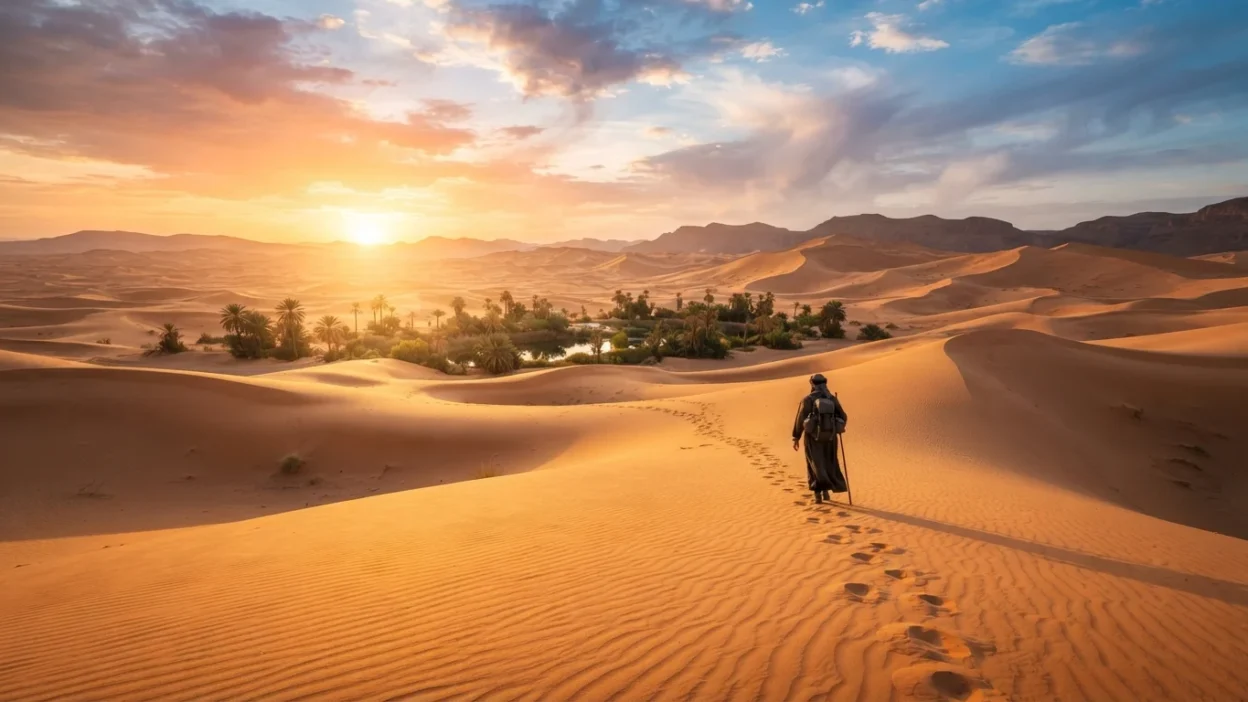
- Walking through a desert: Persevering through a difficult stage of life.
- Finding an oasis: Hope, healing, or unexpected opportunities.
- Lost in the desert: Feeling uncertain or searching for direction.
- Blooming desert: Renewal, transformation, and positive change.
- Desert storm: Emotional conflict or major life changes.
- Watching a desert sunset: Acceptance, peace, and emotional maturity.
Most desert dreams encourage resilience, patience, and trust that difficult seasons will eventually lead to growth.
Modern Meaning of Desert Symbolism
Today, desert symbolism continues to inspire people facing challenges, transitions, and personal development.
Modern interpretations often associate deserts with:
- Self-discovery
- Mindfulness
- Minimalism
- Emotional resilience
- Independence
- Adventure
- Personal growth
- Mental clarity
- Renewal
Many people view the desert as a reminder that simplicity often brings greater appreciation, purpose, and inner peace.
Desert Symbolism at a Glance
| Aspect | Symbolic Meaning |
|---|---|
| Mind | Clarity and self-reflection |
| Heart | Courage and perseverance |
| Spirit | Faith and transformation |
| Life | Growth through challenges |
| Character | Resilience and patience |
| Nature | Simplicity and endurance |
| Personal Journey | Renewal and purpose |
| Future | Hope after hardship |
Frequently Asked Questions
What does desert symbolism mean?
Desert symbolism represents endurance, spiritual growth, solitude, resilience, transformation, and hope gained through life’s challenges.
Why is the desert a symbol of spiritual growth?
The desert removes distractions, encouraging reflection, faith, self-discovery, and deeper spiritual understanding during difficult seasons.
What does the desert symbolize in the Bible?
In the Bible, the desert symbolizes testing, preparation, dependence on God, purification, and spiritual renewal before fulfilling a greater purpose.
What does dreaming about a desert mean?
Dreaming of a desert often symbolizes emotional challenges, personal transformation, resilience, or the search for meaning and direction.
Why do deserts symbolize transformation?
Harsh desert conditions require endurance and adaptability, making the desert a universal symbol of growth, resilience, and new beginnings.
Conclusion
Desert symbolism reminds us that even life’s most difficult seasons can become places of remarkable growth and renewal. Whether understood through spirituality, history, dreams, or personal experience, deserts symbolize resilience, faith, transformation, and the enduring hope that follows perseverance.