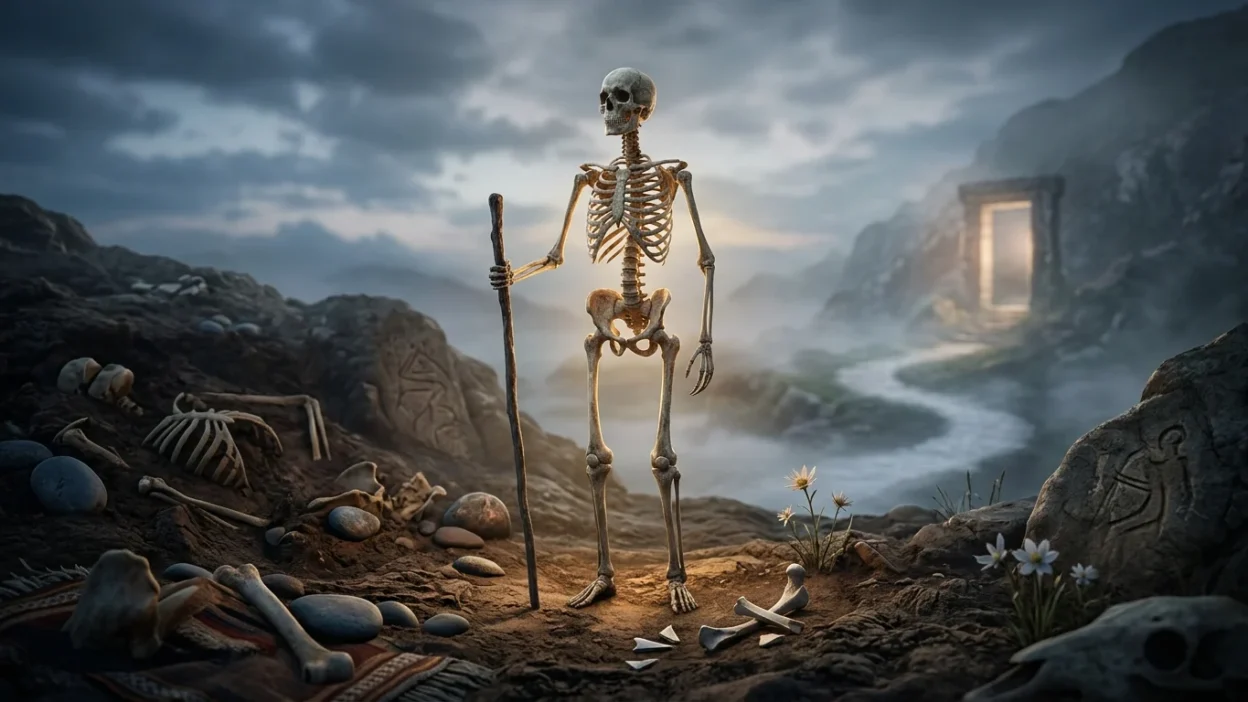
Skeleton symbolism reveals mortality, permanence, and deeper truths, showing how bones connect identity, meaning, and life itself.
When studying skeleton symbolism, I have found that bones and skeletons are more than a simple symbol of death. They often represent mortality, permanence, and the lasting parts of who we are. As the last things left behind, bones can symbolize the earth, the enduring traditions of societies, and even ancient burial customs. They also reflect the truest self and barest self, serving as the frame of our bodies, a home and anchor within the physical world. This gives them lasting significance and a deeper meaning that extends beyond physical existence.
In discussions about dreams, bones can carry symbolic messages. Being stripped to the bone or cut to the bone may point to a sudden insight, an emotional attack, or a challenge involving one’s personality. Images of fractured limbs can suggest a threat to the foundations of life or a loss of personal power, while broken bones may reveal a fundamental weakness in personal plans or psychology. These interpretations often encourage people to look beneath the surface and examine what truly supports them.
Many symbolic beings that adorn themselves with bones are linked to aging and death rather than permanence. In everyday language, the phrase skeleton in the closet points to a hidden secret, showing how skeletal imagery has become part of common speech through colloquialism. Whether viewed spiritually, psychologically, or culturally, skeletons continue to communicate powerful ideas about life and human experience.
Skeleton Symbolism Meaning (Clear Definition)
Skeleton symbolism refers to the symbolic representation of mortality, transformation, permanence, inner truth, and the foundation of life beneath outward appearances.
Because a skeleton is the structure that supports the body, it often symbolizes what is essential, enduring, and impossible to hide.
Common Symbolic Meanings of Skeletons
| Symbolic Meaning | Interpretation |
|---|---|
| Mortality | Reminder of life’s temporary nature |
| Transformation | Change, renewal, and rebirth |
| Truth | The core reality beneath appearances |
| Endurance | Strength that survives hardship |
| Wisdom | Understanding gained through experience |
| Equality | All humans share the same basic structure |
| Spiritual Transition | Passage between life stages |
What Does Skeleton Symbolism Represent?
Skeleton symbolism represents the underlying truths of existence. It strips away external differences and reveals what is fundamental and universal.
Common symbolic representations include:
- Mortality and impermanence
- Transformation and renewal
- Human equality
- Inner strength
- Authenticity and truth
- Survival through challenges
- The cycle of life and death
Many people view skeletons as reminders to focus on what truly matters rather than becoming overly attached to temporary circumstances.
Spiritual Meaning of Skeleton Symbolism
Spiritually, skeleton symbolism often reflects transformation and personal awakening. Just as a skeleton remains when superficial layers disappear, it symbolizes the enduring essence of the soul.
Many spiritual traditions associate skeletons with:
- Spiritual rebirth
- Letting go of old identities
- Personal transformation
- Acceptance of life’s cycles
- Connection between life and death
The image of a skeleton can encourage individuals to release fear and embrace growth. It reminds us that endings often create space for new beginnings.
Biblical / Religious Meaning of Skeleton Symbolism
In biblical and religious contexts, bones and skeletons frequently symbolize resurrection, restoration, and divine power.
One of the most famous examples appears in the vision of dry bones, where lifeless bones are restored and brought back to life. This imagery represents hope, renewal, and spiritual revival.
Religious interpretations of skeleton symbolism may include:
- Resurrection and eternal life
- Divine restoration
- Human mortality
- Spiritual awakening
- Faith during difficult times
Rather than focusing solely on death, many religious traditions view skeleton imagery as a symbol of hope and renewal.
Skeleton Symbolism in History and Culture
Throughout history, skeletons have carried different meanings depending on cultural beliefs and traditions.
Ancient Civilizations
Many ancient societies used skeletal imagery to acknowledge mortality and honor ancestors.
Medieval Europe
Skeletons often appeared in art and literature as reminders that death comes to all people regardless of status or wealth.
Mexican Traditions
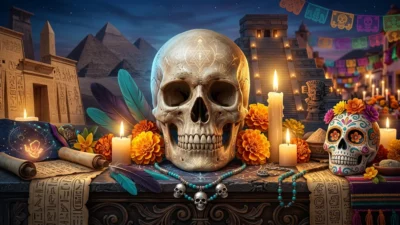
The famous skeletal figures associated with the Day of the Dead celebrate remembrance, family connections, and the continuity of life.
Eastern Traditions
Some Eastern philosophies view skeletal imagery as a reminder of impermanence and detachment from material concerns.
Across cultures, skeleton symbolism often encourages reflection on life’s deeper meaning.
Skeleton Symbolism in Literature and Art
Skeletons have long been powerful symbols in literature and visual art.
Authors frequently use skeletal imagery to explore themes such as:
- Mortality
- Human vulnerability
- Truth and honesty
- Transformation
- The passage of time
In art, skeletons can evoke both fear and wisdom. They often challenge viewers to think about existence, identity, and what remains after life’s temporary experiences pass away.
Because of their universal meaning, skeletons continue to appear in modern storytelling, painting, sculpture, and film.
Dream Meaning of Skeleton Symbolism
Dreams involving skeletons can have several interpretations depending on the context.
Common dream meanings include:
- Personal transformation
- Fear of change
- Hidden truths coming to light
- Reflection on mortality
- Letting go of the past
Common Skeleton Dream Scenarios
Seeing a skeleton: May indicate self-reflection or awareness of an important truth.
Talking to a skeleton: Can symbolize wisdom emerging from the subconscious mind.
Finding a skeleton: Often represents discovering hidden knowledge or unresolved issues.
A friendly skeleton: May suggest acceptance of change and personal growth.
Dreams about skeletons are not always negative. Many symbolize healing, renewal, and emotional growth.
Modern Meaning of Skeleton Symbolism
In modern culture, skeleton symbolism has evolved beyond traditional associations with death.
Today, skeletons often represent:
- Authenticity
- Personal resilience
- Transformation
- Self-awareness
- Overcoming challenges
- Acceptance of life’s realities
Skeleton imagery appears in fashion, art, entertainment, and personal development because it communicates powerful messages about truth and endurance.
Many people now interpret skeleton symbolism as a reminder to live fully, appreciate the present moment, and embrace personal growth.
Frequently Asked Questions About Skeleton Symbolism
What is the main meaning of skeleton symbolism?
Skeleton symbolism primarily represents mortality, transformation, truth, endurance, and the deeper foundations of life.
Is skeleton symbolism always connected to death?
No. Although skeletons symbolize mortality, they also represent renewal, resilience, wisdom, and spiritual growth.
What do skeletons symbolize spiritually?
Spiritually, skeletons often symbolize rebirth, transformation, personal awakening, and the enduring nature of the soul.
What does a skeleton mean in dreams?
A skeleton in dreams may represent hidden truths, personal growth, self-discovery, or acceptance of major life changes.
Why do skeletons appear in so many cultures?
Skeletons are universal symbols because they remind people of shared human experiences, mortality, and life’s ongoing cycles.
Conclusion
Skeleton symbolism goes far beyond its connection to death. It serves as a powerful reminder of transformation, resilience, truth, and the enduring essence that remains beneath life’s surface. By understanding its deeper meaning, we can gain a greater appreciation for growth, renewal, and the precious nature of existence.

Miles Arthur is a passionate content writer at Symblosim.com, specializing in symbol meanings, cultural symbolism, spiritual interpretations, and historical signs. He creates informative articles that help readers understand the deeper significance of symbols.