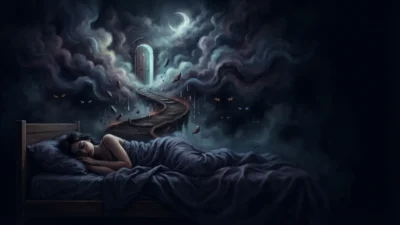
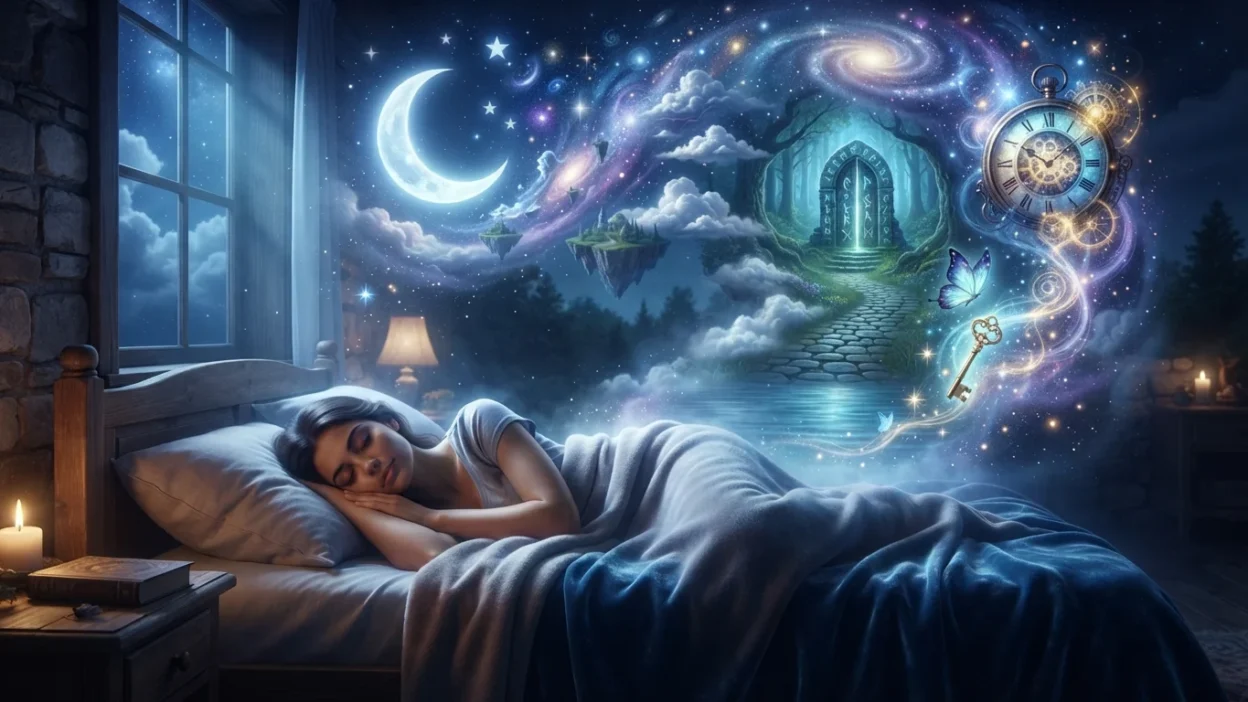
Dream symbolism has fascinated people for thousands of years. Dreams can feel vivid, emotional, mysterious, or completely ordinary, yet many people wonder whether the images and events they experience during sleep carry deeper meaning.
At its simplest, dream symbolism is the idea that people, objects, places, actions, and emotions appearing in dreams can represent thoughts, feelings, experiences, fears, desires, or spiritual ideas. While not every dream has a universal meaning, understanding common dream symbols can provide a useful way to reflect on your inner world.
Dream Symbolism Meaning (Clear Definition)
Dream symbolism refers to the interpretation of images, events, characters, emotions, and situations that appear in dreams as representations of deeper psychological, emotional, cultural, or spiritual ideas.
A dream may communicate through symbols rather than direct language. For example, water might represent emotions, a journey may symbolize change, and a locked door may suggest an obstacle or unanswered question.
Dream symbolism is highly personal. The same symbol can mean different things to different people depending on their memories, culture, emotions, and life circumstances.
Common Dream Symbols and Their Meanings
| Dream Symbol | Common Symbolic Meaning |
|---|---|
| Water | Emotions, change, uncertainty, emotional depth |
| Flying | Freedom, ambition, escape, confidence |
| Falling | Insecurity, loss of control, anxiety |
| House | Self, identity, memories, personal life |
| Snake | Transformation, danger, healing, hidden concerns |
| Death | Endings, transformation, renewal |
| Door | Opportunity, transition, mystery, choice |
| Road | Life direction, progress, journey |
| Fire | Passion, destruction, purification, transformation |
| Light | Hope, awareness, knowledge, spiritual insight |
These meanings are general interpretations, not fixed rules. Your personal association with a symbol often matters more than a traditional interpretation.
What Does Dream Symbolism Represent?
Dream symbolism can represent many aspects of human experience. Dreams often combine memories, emotions, imagination, concerns, and familiar experiences into unusual stories.
1. Emotions
Dreams can express emotions that are difficult to acknowledge while awake. Fear, sadness, excitement, anger, love, and confusion may appear through symbolic situations.
2. Personal Experiences
A dream may transform something from everyday life into a symbolic scene. A stressful workplace, relationship, decision, or major life event may influence the images that appear during sleep.
3. Unconscious Thoughts
Dream symbolism is often associated with thoughts outside ordinary conscious attention. A dream may bring an overlooked concern or desire into awareness.
4. Change and Transition
Many dream symbols involve movement, journeys, doors, bridges, houses, or changing landscapes. These images can represent periods of transition or personal growth.
5. Fear and Anxiety
Being chased, falling, becoming trapped, or losing something may symbolize feelings of vulnerability, pressure, uncertainty, or lack of control.
6. Hope and Desire
Dreams can also reflect wishes and aspirations. Flying, reaching a destination, finding treasure, meeting someone special, or discovering a beautiful place may represent hope, freedom, achievement, or emotional fulfillment.
Spiritual Meaning of Dream Symbolism
The spiritual meaning of dream symbolism varies widely between traditions.
Many spiritual systems regard dreams as opportunities for reflection, guidance, revelation, or connection with something greater than the individual. A dream may be interpreted as a message from the subconscious, a spiritual experience, or a symbolic reflection of one’s life journey.
Common spiritual dream symbols include:
- Light: Spiritual awareness, truth, hope, or divine guidance
- Water: Cleansing, renewal, emotional transformation, or spiritual depth
- Birds: Freedom, transcendence, messages, or higher perspective
- Mountains: Spiritual challenges, wisdom, achievement, or sacred journeys
- Stars: Hope, destiny, guidance, or the infinite
- Gardens: Growth, peace, renewal, and spiritual abundance
- Doors: New beginnings, opportunities, or spiritual transitions
A spiritual interpretation should not automatically be treated as a supernatural prediction. For many people, the value of dream symbolism lies in reflection and personal meaning.
Biblical / Religious Meaning of Dream Symbolism
Dreams have an important place in several religious traditions, including Christianity, Judaism, and Islam.
In the Bible, dreams sometimes appear as vehicles for warnings, revelations, guidance, or messages. Joseph’s dreams in Genesis, for example, play an important role in the biblical narrative. The Book of Daniel also contains significant dream and vision imagery.
The New Testament includes dreams associated with divine guidance, including the warning given to Joseph concerning Jesus.
Religious interpretations of dreams, however, generally depend on the specific tradition and context. Not every dream is necessarily considered a divine message.
Islamic tradition also contains a long history of discussing dreams and their interpretation, distinguishing between different types of dream experiences and their possible significance.
The broader religious symbolism of dreams often centers on guidance, revelation, warning, spiritual reflection, and divine mystery.
Dream Symbolism in History and Culture
People have tried to understand dreams since ancient times.
Ancient Egyptians considered dreams significant and developed traditions for interpreting them. Dream interpretation also appeared in ancient Mesopotamia, Greece, Rome, and other cultures.
The ancient Greek world associated dreams with gods, prophecy, healing, and messages from the divine. Some people even traveled to sacred healing sites hoping for meaningful dreams.
Across cultures, dreams have been viewed in very different ways. Some traditions considered them supernatural communications, while others understood them as reflections of the mind or soul.
This cultural diversity explains why dream symbolism has never had one universal dictionary.
A symbol meaningful in one society may carry a completely different meaning somewhere else.
Dream Symbolism in Literature and Art
Dreams have inspired writers, poets, painters, filmmakers, and other artists for centuries.
Literature often uses dreams to reveal hidden desires, foreshadow events, challenge reality, or explore a character’s inner life. Dream sequences can blur the boundary between imagination and reality.
In visual art, dreamlike imagery often includes distorted landscapes, unusual proportions, floating objects, mysterious figures, and unexpected combinations.
Dream symbolism is especially powerful in art because it allows creators to represent abstract ideas visually. Fear can become a monster, memory can become an old house, and freedom can become flight.
Surrealist artists famously explored dream imagery as a way of moving beyond ordinary logic and accessing unexpected associations.
Dream Meaning of Dream Symbolism
Dreaming about dreams, dream interpretation, or mysterious dream symbols can itself carry symbolic significance.
Such dreams may suggest that you are paying greater attention to your emotions, intuition, memories, or unanswered questions.
If you dream that you are trying to interpret a symbol, it may represent a desire to understand something confusing in your waking life.
A recurring dream may indicate that a particular emotion, concern, memory, or unresolved issue continues to hold your attention.
A vivid dream can also simply reflect the normal complexity of dreaming rather than carrying a specific hidden message.
The most useful approach is to consider what the dream symbol means to you, rather than relying entirely on a universal dream dictionary.
Modern Meaning of Dream Symbolism
Today, dream symbolism is explored through psychology, spirituality, popular culture, self-reflection, and personal development.
Psychological approaches may examine dreams in relation to emotions, memories, patterns of thought, and personal experiences. Spiritual approaches may focus on intuition, transformation, guidance, or symbolic messages.
Modern dream interpretation also appears in books, journals, apps, social media, films, and online discussions.
One of the most valuable modern approaches is keeping a dream journal. Recording the dream soon after waking can help preserve details that might otherwise disappear quickly.
When interpreting a dream, consider:
- What happened in the dream?
- What emotions did you experience?
- Which image stood out most strongly?
- What does that image personally remind you of?
- Is anything similar happening in your waking life?
- Has this symbol appeared in previous dreams?
- Has your interpretation changed over time?
These questions can turn dream interpretation into a thoughtful process of self-reflection.
Common Dream Symbolism Themes
Although dreams are deeply personal, certain themes appear frequently across dream experiences.
Falling
Falling dreams are commonly associated with anxiety, insecurity, uncertainty, or a perceived loss of control.
Flying
Flying may symbolize freedom, confidence, ambition, escape, or a desire to rise above limitations.
Being Chased
Being chased can represent avoidance, fear, pressure, or an unresolved problem that feels difficult to confront.
Water
Water often symbolizes emotions because its condition can change dramatically. Calm water may suggest peace, while turbulent water can represent emotional conflict.
Death
Dream death does not necessarily symbolize literal death. It can represent endings, transformation, separation, or the beginning of a new stage.
Houses
A house may symbolize the self or different aspects of personal life. Different rooms can sometimes represent different memories, emotions, or areas of experience.
Roads and Journeys
A road often represents direction, progress, choices, and the journey through life.
How to Interpret Your Dreams
There is no single formula that can accurately decode every dream. Instead, interpretation works best when personal context is considered.
Start by writing down the dream’s most important images and emotions. Then think about what those images mean in your own life.
For example, a snake might represent danger to one person and healing or transformation to another. A house could represent comfort for someone else but conflict or painful memories for another.
Pay attention to emotion before symbolism.
If a particular image made you feel peaceful, excited, frightened, or confused, that emotional response may provide more insight than a standard symbol dictionary.
Dream interpretation becomes especially meaningful when you look for patterns rather than trying to assign a fixed definition to every individual image.
FAQs About Dream Symbolism
What is dream symbolism?
Dream symbolism is the interpretation of dream images, situations, people, and emotions as representations of deeper personal, emotional, psychological, cultural, or spiritual ideas.
Do dreams have universal meanings?
Some dream themes are widely recognized, but symbols do not have universal meanings. Personal experiences, emotions, culture, and individual associations strongly influence interpretation.
What does water symbolize in dreams?
Water commonly symbolizes emotions, change, renewal, and emotional depth. Its meaning can change depending on whether the water is calm, clear, dark, or turbulent.
What does falling symbolize in a dream?
Falling dreams are often associated with insecurity, anxiety, uncertainty, or feeling that you have lost control of a situation.
Can dreams predict the future?
There is no reliable scientific basis for treating ordinary dreams as definite predictions of future events. Dreams can, however, reflect expectations, fears, memories, and concerns about what may happen.
Conclusion
Dream symbolism offers a fascinating way to explore the connection between imagination, emotion, memory, culture, and personal experience. While no single symbol has one guaranteed meaning, dreams can encourage us to pause, reflect, and listen more carefully to the feelings and questions within us.

Thomas Luke is a dedicated symbolism writer at Symblosim.com, exploring symbol meanings, cultural traditions, spiritual symbolism, and historical interpretations. He creates insightful content that helps readers uncover the stories and significance behind symbols.