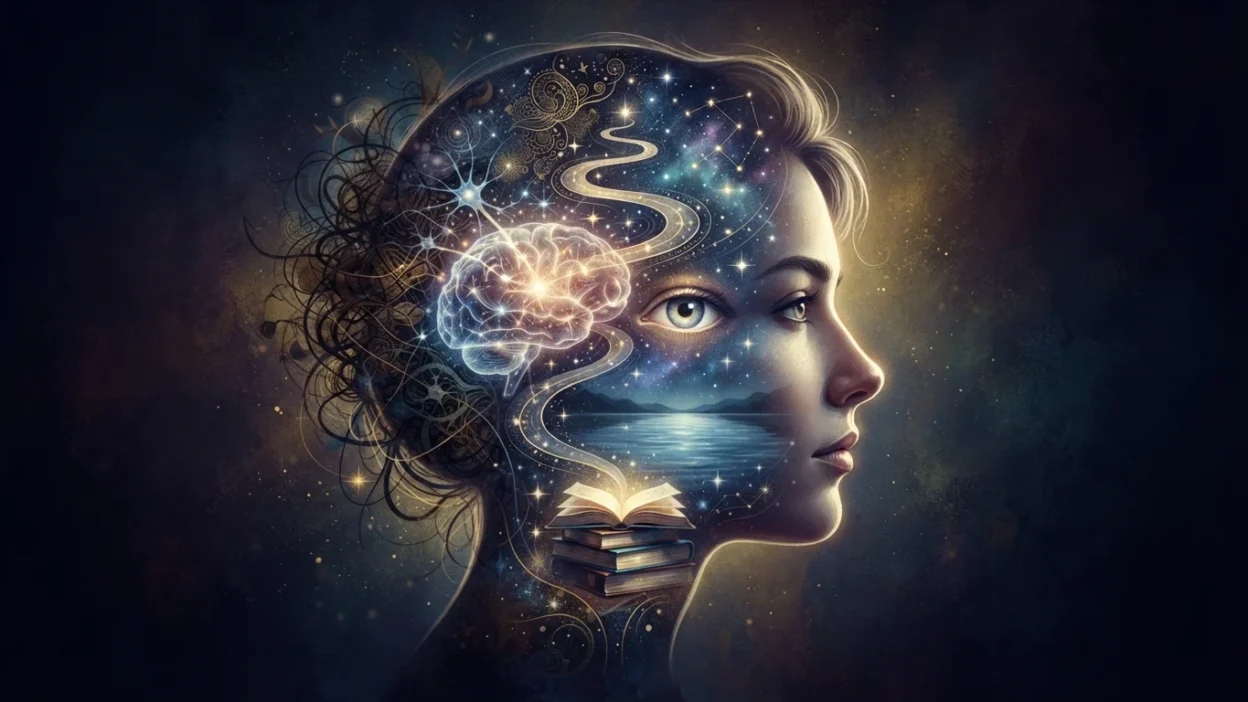
The mind symbolism represents one of the deepest ideas in human thought. Across cultures and traditions, the mind is associated with intelligence, consciousness, memory, imagination, reasoning, and inner identity.
When the mind appears as a symbol in dreams, literature, art, religion, or everyday language, it often points to thoughts and experiences that cannot be seen physically. It can represent wisdom, self-awareness, mental struggle, creativity, or the search for truth.
Understanding mind symbolism can therefore offer a useful way to explore how people think about consciousness, identity, knowledge, and the hidden parts of human experience.
Mind Symbolism Meaning (Clear Definition)
Mind symbolism refers to the use of the mind as a representation of thought, consciousness, intelligence, memory, awareness, and inner experience.
The mind is invisible, yet it strongly influences how people understand themselves and the world around them. Because of this, it has become a powerful symbol of the inner self.
Depending on the context, the mind may symbolize:
- Intelligence and knowledge
- Consciousness and awareness
- Wisdom and understanding
- Memory and experience
- Imagination and creativity
- Reason and logic
- Inner conflict
- Personal identity
- Intuition and perception
- Emotional or psychological life
Mind symbolism is rarely limited to one meaning. A calm mind may symbolize peace, while a troubled mind can represent confusion, fear, or inner conflict.
Secondary Meanings Associated With the Mind
Several related ideas frequently appear alongside mind symbolism:
- Consciousness: Awareness of oneself and one’s surroundings.
- Intellect: The ability to reason, learn, and understand.
- Wisdom: Knowledge developed through experience and reflection.
- Memory: The ability to retain and recall experiences.
- Imagination: The mental ability to create ideas and possibilities.
- Self-awareness: Understanding one’s own thoughts, emotions, and behavior.
- Inner world: The private realm of thoughts, feelings, memories, and beliefs.
What Does Mind Symbolism Represent?
The mind can represent many aspects of human existence. Its meaning changes depending on the cultural, spiritual, or personal context.
Intelligence and Knowledge
One of the most common meanings of the mind is intelligence.
Because thinking allows people to learn, solve problems, and understand complex ideas, the mind naturally symbolizes knowledge and intellectual ability.
A strong or brilliant mind may therefore represent learning, wisdom, discovery, and curiosity.
Consciousness
The mind is also closely connected with consciousness.
In symbolic language, an awakened or open mind may represent greater awareness. It can suggest that someone has begun to understand themselves or see the world differently.
Memory
The mind stores memories and experiences, making it a natural symbol of the past.
A symbolic mind may represent childhood memories, personal history, forgotten experiences, or lessons learned through life.
Imagination and Creativity
Artists, writers, inventors, and thinkers often rely on imagination.
For this reason, the mind can symbolize creativity and the ability to imagine something that does not yet exist.
Inner Conflict
A divided or troubled mind can represent psychological tension.
Symbolically, this may suggest conflicting beliefs, difficult decisions, anxiety, uncertainty, or a struggle between reason and emotion.
Self-Awareness
The mind can also symbolize the journey toward understanding oneself.
This interpretation connects mind symbolism with reflection, personal growth, identity, and emotional awareness.
Spiritual Meaning of Mind Symbolism
Spiritually, the mind is often viewed as a doorway between ordinary experience and deeper awareness.
Many spiritual traditions encourage people to observe their thoughts rather than automatically follow them. In this sense, the mind can symbolize both the source of confusion and the path toward understanding.
A peaceful mind may represent:
- Inner peace
- Spiritual awareness
- Meditation
- Clarity
- Detachment
- Wisdom
- Self-knowledge
A restless mind, by contrast, may symbolize attachment, fear, distraction, uncertainty, or unresolved inner concerns.
Mind as a Path to Spiritual Awareness
In many spiritual philosophies, understanding the mind is part of understanding the self.
Meditation and contemplation often focus attention on thoughts, emotions, and awareness. The symbolic lesson is that people can learn to observe their inner world rather than being completely controlled by it.
This gives the mind a dual meaning: it can be both a source of distraction and a tool for awakening.
Biblical / Religious Meaning of Mind Symbolism
In biblical and religious traditions, the mind is often associated with thought, intention, understanding, wisdom, and devotion.
Biblical language frequently connects the mind with the inner life of a person. The condition of one’s thoughts can reflect one’s character, choices, beliefs, and relationship with God.
The mind may therefore symbolize:
- Understanding
- Wisdom
- Faith
- Moral judgment
- Intention
- Spiritual reflection
- Inner transformation
The Mind and Inner Transformation
Religious teachings often emphasize changing one’s thoughts and developing a renewed inner life.
This makes the mind a symbol of transformation. A changed way of thinking can lead to changed behavior, values, and choices.
Mind and Wisdom
Wisdom is another important religious association.
The mind does not simply represent the ability to collect information. Symbolically, it can represent the ability to recognize truth, make wise decisions, and understand one’s responsibilities.
Mind Symbolism in History and Culture
Ideas about the mind have changed throughout history.
Ancient cultures often connected mental activity with the soul, spirit, heart, or divine forces. In some traditions, the physical location of thought was understood differently from modern scientific views.
Over time, philosophical and scientific approaches increasingly treated the mind as a subject that could be studied through reason, observation, and psychology.
Ancient Philosophical Views
Ancient Greek philosophers explored questions about knowledge, reason, consciousness, and the nature of the self.
The mind became closely associated with the search for truth and the distinction between appearance and reality.
Eastern Philosophical Traditions
Many Eastern traditions have placed significant attention on the relationship between thoughts, awareness, suffering, and liberation.
Meditation practices often encourage people to observe mental activity and develop greater awareness.
Indigenous and Traditional Perspectives
Different traditional cultures have developed their own understandings of thought, dreams, memory, spirit, and consciousness.
These perspectives remind us that the symbolism of the mind is not universal in exactly the same way. Its meaning depends heavily on cultural beliefs and experiences.
Mind Symbolism in Literature and Art
The mind is one of the most powerful symbolic subjects in literature and art because creators often use it to explore invisible experiences.
A character’s mind can become a symbolic landscape where memories, fears, desires, dreams, and conflicts appear.
The Mind as an Inner Landscape
Writers may describe the mind as a room, maze, ocean, prison, garden, mirror, or journey.
Each image communicates something different.
A maze may symbolize confusion.
A prison may represent feeling trapped by one’s thoughts.
A garden may suggest growth, imagination, or inner peace.
A mirror may symbolize self-reflection and identity.
Mind Symbolism in Poetry
Poets often use the mind to explore memory, identity, love, grief, imagination, and existential questions.
Instead of directly explaining a character’s thoughts, poetry may transform those thoughts into images and metaphors.
Mind Symbolism in Visual Art
Artists can represent the mind through surreal imagery, fragmented figures, overlapping faces, labyrinths, eyes, mirrors, floating objects, or abstract forms.
These visual symbols can suggest that the inner world is complex and difficult to express literally.
Dream Meaning of Mind Symbolism
Dreams involving the mind can have many personal interpretations. There is no single universal meaning, so the details and emotions of the dream matter.
A dream about a clear or peaceful mind may symbolize clarity, emotional balance, or confidence.
A confused mind may reflect uncertainty or difficulty making a decision.
A racing mind may symbolize stress, pressure, or too many concerns.
A blank mind may represent exhaustion, uncertainty, emotional numbness, or a desire to escape overwhelming thoughts.
Common Mind-Related Dream Symbols
| Dream Symbol | Possible Symbolic Meaning |
|---|---|
| Clear mind | Clarity, peace, understanding |
| Confused thoughts | Uncertainty, inner conflict |
| Racing thoughts | Stress, pressure, worry |
| Forgotten memory | Unresolved past experience |
| Mental maze | Confusion or difficult choices |
| Open mind | Learning, acceptance, new ideas |
| Broken thoughts | Emotional conflict or overwhelm |
| Quiet mind | Peace, rest, reflection |
Dream interpretation is personal. A symbol that means freedom to one person may represent fear or uncertainty to another.
Modern Meaning of Mind Symbolism
In modern life, the mind is often connected with mental health, self-awareness, productivity, creativity, and personal development.
People increasingly discuss the importance of understanding their thoughts and maintaining a healthy relationship with their inner world.
The mind has therefore become a symbol not only of intelligence but also of emotional well-being.
Mindfulness and Awareness
Modern mindfulness practices emphasize observing thoughts without immediately reacting to them.
Symbolically, this represents the idea that awareness can create distance between a person and their thoughts.
Mental Strength
The phrase “strong mind” often represents resilience, determination, discipline, and the ability to handle challenges.
However, mental strength does not necessarily mean suppressing emotions. In a modern context, it can also mean recognizing emotions and responding to them in healthy ways.
Digital Culture and the Mind
Technology has also influenced modern ideas about the mind.
Constant notifications, information overload, social media, and digital entertainment have created new conversations about attention and mental space.
As a result, a quiet or focused mind can symbolize something increasingly valuable: the ability to concentrate and remain present.
Mind Symbolism and Personal Growth
The mind is closely connected with personal transformation.
Changing the way you think can change how you interpret experiences, make decisions, and respond to challenges.
This does not mean that positive thinking solves every problem. Rather, awareness of one’s thoughts can help people understand patterns and make more deliberate choices.
Mind symbolism can therefore represent a journey:
Thought → Awareness → Understanding → Choice → Growth
This progression captures one of the most meaningful interpretations of the mind: the possibility of becoming more aware of oneself.
Mind Symbolism in Everyday Language
Many everyday expressions use the mind symbolically.
For example:
- Open-minded — willing to consider new ideas.
- Mind over matter — emphasizing mental determination.
- Peace of mind — a feeling of calm and security.
- State of mind — a person’s emotional or mental condition.
- Change your mind — alter an opinion or decision.
- Mind’s eye — the ability to imagine or visualize something mentally.
- Lose your mind — become extremely upset, excited, or overwhelmed.
- Make up your mind — reach a decision.
These expressions show how deeply the mind is connected with everyday ideas about identity, choice, emotion, and perception.
Symbolic Meanings of the Mind at a Glance
The central meanings of mind symbolism can be summarized as follows:
| Symbolic Meaning | What It Suggests |
|---|---|
| Intelligence | Knowledge and reasoning |
| Consciousness | Awareness and perception |
| Memory | Experience and the past |
| Imagination | Creativity and possibility |
| Wisdom | Understanding and judgment |
| Inner conflict | Confusion or opposing thoughts |
| Peace | Mental calm and balance |
| Growth | Self-awareness and development |
| Identity | Sense of self |
| Spiritual awareness | Deeper understanding |
Frequently Asked Questions About Mind Symbolism
What does the mind symbolize?
The mind commonly symbolizes intelligence, consciousness, memory, imagination, wisdom, identity, and inner experience. Its meaning changes depending on cultural and personal context.
What is the spiritual meaning of the mind?
Spiritually, the mind can symbolize awareness, inner peace, contemplation, wisdom, and the journey toward greater self-understanding.
What does a mind symbolize in dreams?
A mind in a dream may represent thoughts, worries, memories, clarity, confusion, or personal awareness. The dreamer’s emotions and circumstances are important when interpreting the symbol.
What does an open mind symbolize?
An open mind commonly symbolizes acceptance, curiosity, flexibility, learning, and willingness to consider new ideas or perspectives.
Why is the mind important in symbolism?
The mind represents the invisible inner world of human experience. It gives symbolic form to thoughts, memories, beliefs, imagination, consciousness, and personal identity.
Conclusion
Mind symbolism is ultimately a symbol of the inner world—the place where thoughts, memories, ideas, beliefs, imagination, and awareness come together.
Across spiritual traditions, religions, cultures, literature, dreams, and modern life, the mind can represent both complexity and possibility. It may symbolize confusion when troubled, wisdom when developed, and peace when quiet.
Perhaps its deepest meaning is self-awareness. Understanding the mind means looking beyond what can be seen and becoming more attentive to the thoughts and experiences that shape who we are.