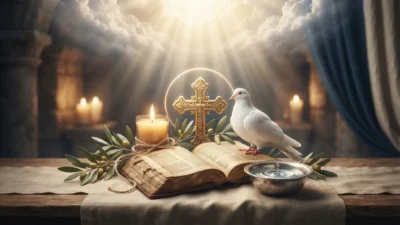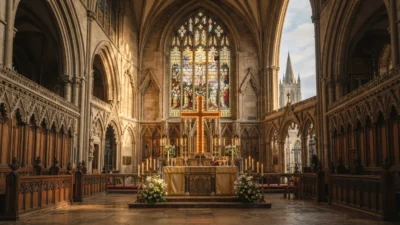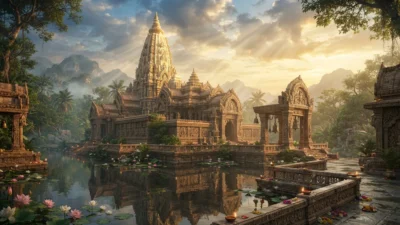
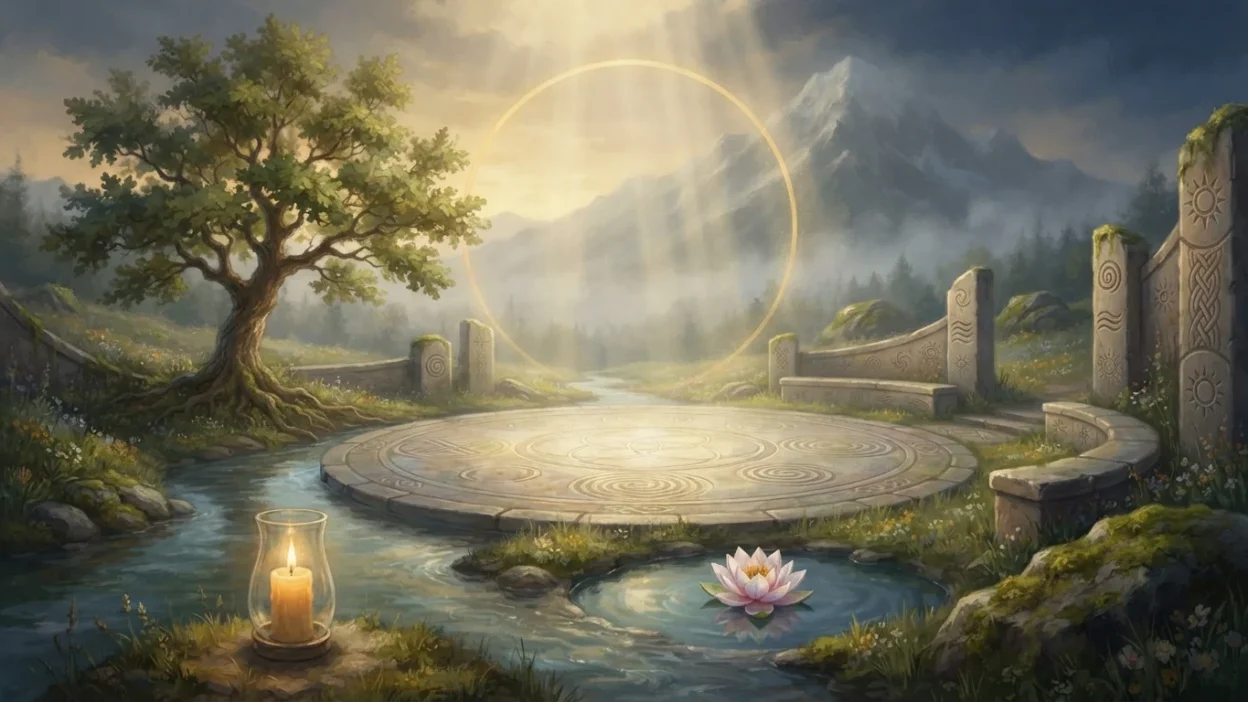
Sacred symbolism is the language people use to express spiritual ideas through objects, images, colors, numbers, places, gestures, and rituals. Across cultures and religions, symbols help communicate ideas that can be difficult to explain with ordinary words.
A sacred symbol may represent divine presence, faith, protection, creation, death, rebirth, purity, wisdom, or the connection between the physical and spiritual worlds. A simple circle, flame, tree, or light can carry deep meaning when placed within a sacred tradition.
Understanding sacred symbolism also means recognizing that symbols do not have one universal meaning. Their interpretation depends on religion, culture, historical period, personal belief, and context.
Sacred Symbolism Meaning (Clear Definition)
Sacred symbolism refers to symbols, objects, images, signs, or practices that represent spiritual, religious, divine, or deeply meaningful ideas.
A sacred symbol can connect something visible and familiar with an invisible or spiritual concept.
For example, light may represent divine presence or truth, while water may symbolize purification, renewal, or life.
Common meanings found in sacred symbolism include:
- Divinity
- Faith
- Purity
- Protection
- Wisdom
- Creation
- Transformation
- Renewal
- Death and rebirth
- Spiritual connection
- Divine guidance
- Eternity
- Peace
The meaning of a symbol becomes stronger when it is connected to a shared tradition, ritual, story, or belief system.
Why Are Sacred Symbols Important?
Sacred symbols make abstract ideas easier to understand and remember.
Concepts such as eternity, holiness, divine power, spiritual transformation, and creation can be difficult to describe. A symbol gives these ideas a recognizable form.
Symbols can also create a sense of belonging. When people recognize the same sacred image, they may feel connected to a community, tradition, or shared history.
What Does Sacred Symbolism Represent?
Sacred symbolism can represent almost every major aspect of spiritual life.
Divine Presence
Many sacred symbols represent the presence of a higher power.
Light, fire, radiance, clouds, mountains, and heavenly imagery are often used to suggest something greater than ordinary human experience.
Purity
Purity is another common symbolic theme.
White clothing, clean water, flowers, light, and certain ritual objects can symbolize spiritual cleanliness, innocence, or moral renewal.
Protection
Sacred symbols are often used as signs of protection.
Amulets, religious emblems, protective prayers, sacred geometry, and guardian figures may represent safety from physical, emotional, or spiritual danger.
Creation
Symbols of creation frequently involve circles, eggs, seeds, trees, water, light, or cosmic imagery.
These symbols can express the beginning of life and the mysterious origins of existence.
Transformation
Sacred symbolism often describes transformation as a movement from one state to another.
Death may symbolize the end of one phase, while rebirth represents renewal and a new beginning.
Eternity
Circular shapes are frequently associated with eternity because they have no obvious beginning or end.
This makes the circle a powerful symbol of continuity, wholeness, infinity, and spiritual completeness.
Spiritual Meaning of Sacred Symbolism
The spiritual meaning of sacred symbols often centers on the relationship between human beings and something greater than themselves.
A sacred symbol may encourage reflection, prayer, meditation, gratitude, or a deeper awareness of existence.
Common spiritual themes include:
- Connection with the divine
- Inner peace
- Spiritual awakening
- Protection
- Faith
- Enlightenment
- Renewal
- Higher consciousness
- Compassion
- Unity
Sacred Symbols as Spiritual Reminders
A symbol can serve as a reminder of a spiritual value.
For example, a person may see a candle and think about hope. Someone else may see a tree and think about growth, stability, or connection.
The symbol does not necessarily create the belief. Instead, it helps focus attention on an idea that already has meaning.
Sacred Geometry
Sacred geometry refers to geometric forms that have been given spiritual or symbolic significance in different traditions.
Circles, spirals, triangles, mandalas, and other geometric patterns may represent harmony, unity, creation, balance, or cosmic order.
Their meanings vary considerably depending on the tradition in which they appear.
Light as a Sacred Symbol
Light is one of the most widespread spiritual symbols.
It can represent:
Darkness → Light
Ignorance → Knowledge
Fear → Hope
Confusion → Understanding
This makes light especially powerful in religious art, ceremonies, poetry, and spiritual writing.
Biblical / Religious Meaning of Sacred Symbolism
Sacred symbolism is central to many religious traditions, but symbols must be understood within their specific contexts.
Sacred Symbols in Christianity
Christianity contains a rich tradition of symbolic imagery.
The cross is one of the most recognizable Christian symbols and is associated with the crucifixion and resurrection of Jesus.
Other important Christian symbols include:
- Dove
- Fish
- Lamb
- Bread and wine
- Light
- Water
- Crown
- Shepherd’s staff
- Chi-Rho
The meanings of these symbols are connected to biblical narratives, theology, worship, and Christian history.
Sacred Symbols in Judaism
Judaism also has important religious symbols.
The Star of David is widely associated with Jewish identity, while the menorah has ancient roots in Jewish religious tradition.
Other meaningful images include the Torah scroll, shofar, and various ritual objects.
Their meanings are shaped by Jewish scripture, religious practice, history, and community traditions.
Sacred Symbols in Islam
Islam has important forms of religious symbolism, although attitudes toward visual representation differ across Islamic traditions.
The Kaaba, mosque architecture, calligraphy, geometric patterns, and the Qur’an itself can carry profound sacred significance.
The crescent and star are widely associated with Islam in popular culture, but they are not a universal or foundational symbol of Islamic belief.
Sacred Symbols in Hinduism
Hindu traditions contain an extensive symbolic vocabulary.
The Om/Aum symbol is strongly associated with sacred sound and spiritual reality. The lotus can represent purity and spiritual growth, while the trident, conch, and various deity forms carry specific meanings within particular traditions.
Sacred Symbols in Buddhism
Buddhist symbolism includes the Dharma wheel, lotus, Buddha images, Bodhi tree, and various mudras.
The lotus is especially significant because it can represent spiritual development: growing from muddy water while producing a beautiful flower.
Sacred Symbolism in History and Culture
Sacred symbols have existed for thousands of years.
Symbols such as the ankh, scarab, Eye of Horus, and lotus were associated with ideas including life, protection, rebirth, and divine power.
Egyptian symbols often appeared in temples, tombs, jewelry, artwork, and religious objects.
Ancient Mesopotamia
Mesopotamian civilizations also used symbolic imagery connected with gods, kingship, protection, fertility, and cosmic order.
Religious symbols could appear on seals, monuments, objects, and architectural structures.
Sacred Mountains
Mountains have frequently been treated as sacred spaces.
Their height and distance from ordinary settlements can create an impression of closeness to the heavens.
Examples of sacred mountains appear in many cultural traditions, although their meanings are specific to each tradition.
Sacred Trees
Trees are another widespread sacred symbol.
They may represent:
- Life
- Growth
- Wisdom
- Connection between heaven and earth
- Fertility
- Stability
- Renewal
The tree of life is a particularly widespread symbolic concept with different interpretations across cultures.
Sacred Symbolism in Literature and Art
Artists and writers frequently use sacred symbols to communicate ideas about life, death, morality, spirituality, and transformation.
Light and Darkness
Literature often uses light to represent truth, goodness, knowledge, or hope.
Darkness may represent ignorance, fear, mystery, death, or uncertainty.
However, darkness is not always negative. Writers may use it to represent mystery, rest, the unconscious, or the unknown.
The Sacred Garden
A garden can symbolize paradise, innocence, fertility, beauty, or a protected spiritual space.
It may also represent the human desire to create harmony between nature and the divine.
The Journey
A journey can become a sacred metaphor for spiritual development.
A character who travels through darkness, wilderness, mountains, or deserts may symbolically move from ignorance toward wisdom.
Sacred Objects in Art
Artists often use symbolic objects such as:
- Candles
- Crosses
- Books
- Flowers
- Water
- Mirrors
- Crowns
- Birds
- Trees
- Circles
- Stars
Their meaning depends on the surrounding visual and cultural context.
Dream Meaning of Sacred Symbolism
Dreams involving sacred symbols can feel especially meaningful, but dream interpretation is personal and should not be treated as a universal prediction.
A sacred symbol in a dream may represent faith, personal values, hope, spiritual questions, transformation, or a desire for guidance.
A candle may suggest hope or clarity.
A temple or sacred building may represent inner reflection, belonging, or a search for meaning.
A cross may reflect Christian faith, sacrifice, responsibility, or a personal association with the symbol.
A lotus may suggest growth, renewal, or overcoming difficulty.
Common Sacred Dream Symbols
| Dream Symbol | Possible Meaning |
|---|---|
| Light | Hope, truth, spiritual awareness |
| Candle | Guidance, faith, remembrance |
| Temple | Reflection, spirituality, belonging |
| Cross | Faith, sacrifice, responsibility |
| Lotus | Purity, growth, renewal |
| Tree | Life, stability, wisdom |
| Mountain | Spiritual challenge or higher purpose |
| Water | Cleansing, renewal, emotional change |
| Circle | Unity, eternity, wholeness |
| Angel | Guidance, protection, reassurance |
The feelings surrounding the dream are often just as important as the symbol itself.
Modern Meaning of Sacred Symbolism
Sacred symbols continue to influence modern life.
People encounter them in religious spaces, architecture, tattoos, jewelry, books, films, meditation practices, ceremonies, and personal artwork.
Sacred Symbols in Jewelry
People may wear sacred symbols as expressions of faith, identity, remembrance, or personal values.
A necklace featuring a cross, Om symbol, lotus, or other religious image can carry deeply personal meaning.
However, sacred jewelry should be approached respectfully, especially when its meaning comes from a culture or religion different from one’s own.
Sacred Symbols in Architecture
Religious buildings often use symbolic architecture.
Height, light, orientation, geometric patterns, doors, windows, domes, towers, and sacred spaces can all communicate spiritual ideas.
The building itself may become a symbolic journey from ordinary space toward something considered sacred.
Sacred Symbolism in Tattoos
Modern tattoo culture frequently uses spiritual and religious symbols.
A sacred tattoo may represent:
- Faith
- Personal transformation
- Protection
- Family
- Spiritual identity
- Remembrance
- Personal values
Because these symbols can have specific religious or cultural meanings, understanding their original context is important.
Sacred Symbolism in Everyday Life
Not every meaningful object is formally sacred.
A family photograph, inherited object, wedding ring, or personal keepsake can become sacred in a personal sense because of the memories and emotions attached to it.
This shows that sacredness can involve both religious tradition and human experience.
Sacred Symbolism and Personal Meaning
One of the most interesting aspects of symbolism is that a shared symbol can have both collective and personal meanings.
A candle may traditionally represent light or prayer, but one individual might associate it with a lost loved one.
A tree may represent life in one tradition while personally reminding someone of childhood.
This creates two layers of symbolism:
Cultural meaning — what a symbol traditionally represents.
Personal meaning — what the symbol represents to an individual.
Both can exist at the same time.
Sacred Symbolism at a Glance
| Sacred Symbol | Common Symbolic Meaning |
|---|---|
| Light | Truth, hope, divine presence |
| Water | Purification, life, renewal |
| Fire | Transformation, divine energy, purification |
| Circle | Eternity, unity, wholeness |
| Tree | Life, growth, wisdom |
| Mountain | Spiritual elevation, challenge, sacred space |
| Lotus | Purity, renewal, spiritual growth |
| Cross | Faith, sacrifice, resurrection in Christianity |
| Dove | Peace, purity, spiritual presence |
| Star | Guidance, heaven, divine light |
| Candle | Prayer, hope, remembrance |
| Sun | Life, creation, divine power |
Common Themes in Sacred Symbolism
Purity and Cleansing
Water, white clothing, light, and certain ritual practices can symbolize purification.
Death and Rebirth
Seeds, seasons, butterflies, rising light, and flowers can represent transformation and renewal.
Unity
Circles, intertwined forms, rings, and sacred geometric patterns can symbolize wholeness and connection.
Protection
Religious emblems, guardian figures, amulets, and sacred inscriptions may symbolize protection.
Wisdom
Trees, books, lamps, mountains, and light may represent knowledge and spiritual understanding.
Creation
Eggs, seeds, light, water, and cosmic circles can symbolize the beginning of life or the universe.
Frequently Asked Questions About Sacred Symbolism
What does sacred symbolism mean?
Sacred symbolism is the use of images, objects, signs, colors, places, or rituals to represent spiritual or religious ideas. It can communicate concepts such as faith, divine presence, protection, purity, and transformation.
Why are symbols important in religion?
Symbols help people express and remember complex spiritual ideas. They can also strengthen community identity and create meaningful connections during religious rituals and traditions.
What is the most common sacred symbol?
There is no single sacred symbol shared equally by all religions. Symbols such as light, water, circles, trees, and stars appear across many traditions, but their specific meanings vary.
What does light symbolize spiritually?
Light commonly represents truth, hope, knowledge, divine presence, purity, and spiritual awakening. Its exact meaning depends on the religious or cultural context.
Can an ordinary object become a sacred symbol?
Yes. An object can become personally sacred because of religious practice, cultural tradition, memory, or emotional significance. Sacred meaning often depends on the relationship people develop with an object or place.
Conclusion
Sacred symbolism gives visible form to ideas that are often difficult to express directly. Through light, water, trees, circles, mountains, animals, colors, and religious objects, cultures have created rich symbolic languages for discussing faith, creation, transformation, protection, wisdom, and the mystery of existence.
The most important lesson is that no symbol should be interpreted without context. A symbol’s meaning can change across religions, cultures, historical periods, and personal experiences.
Ultimately, sacred symbolism reminds us that ordinary images can carry extraordinary meaning. A simple flame can become hope, a tree can become life, and a journey can become a metaphor for discovering something deeper within ourselves.