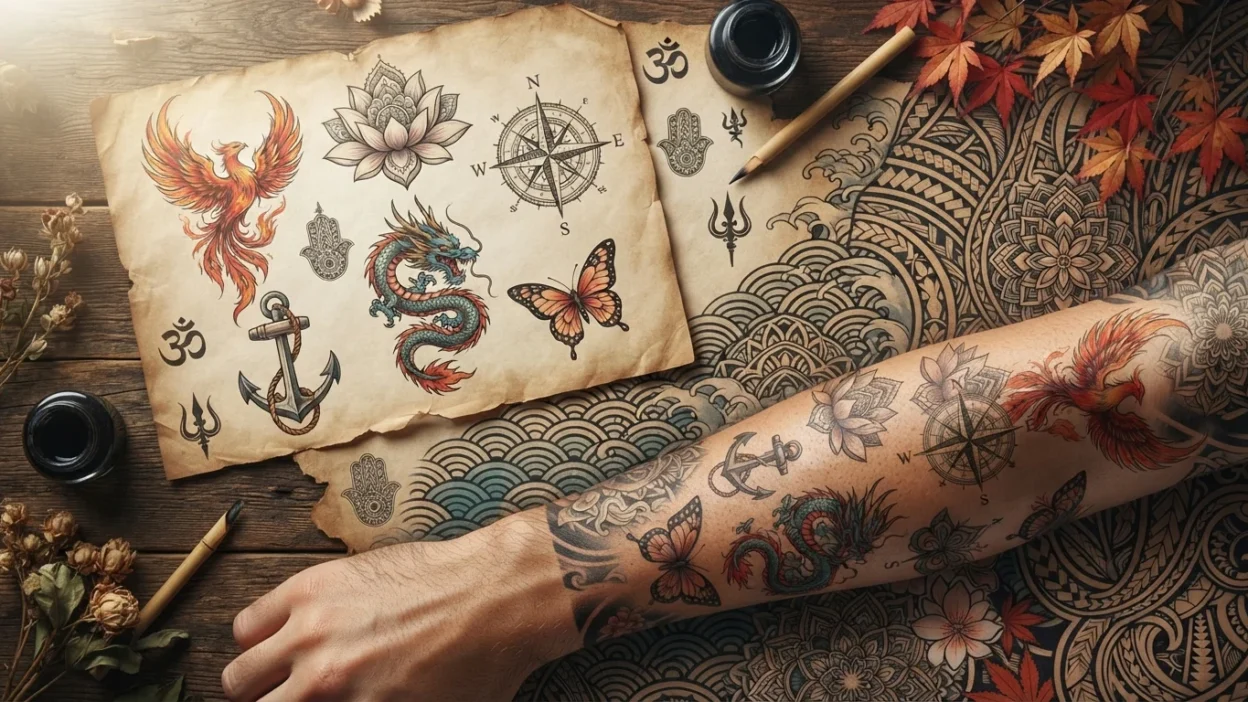
Tattoo symbolism goes far beyond body art.
Throughout history, tattoos have represented identity, courage, protection, spirituality, remembrance, and personal transformation.
Every tattoo tells a story, whether it honors a loved one, celebrates a milestone, reflects cultural heritage, or expresses deeply held beliefs.
Today, tattoo symbolism continues to inspire people seeking meaningful ways to carry their values and experiences with them.
Tattoo Symbolism Meaning (Clear Definition)
Tattoo symbolism refers to the symbolic meanings and messages conveyed through tattoos. Rather than being merely decorative, tattoos often represent personal experiences, emotions, beliefs, achievements, or cultural traditions.
The meaning of a tattoo depends on its design, placement, colors, and the intention behind it. A simple heart tattoo may symbolize love, while a phoenix tattoo often represents rebirth and resilience. For many people, tattoos become permanent reminders of life’s most important moments.
Quick Symbolism Table
| Tattoo Symbol | Common Meaning |
|---|---|
| Heart | Love, compassion, devotion |
| Phoenix | Rebirth, resilience, renewal |
| Dragon | Power, wisdom, protection |
| Butterfly | Transformation, hope, freedom |
| Tree | Growth, stability, life |
| Compass | Guidance, purpose, direction |
| Anchor | Strength, security, hope |
| Lotus | Spiritual awakening, purity, inner peace |
What Does Tattoo Symbolism Represent?
Tattoos symbolize many aspects of human life and identity. Their meanings are often deeply personal, but several themes appear across cultures.
Common symbolic meanings include:
- Personal identity
- Self-expression
- Courage and resilience
- Love and remembrance
- Protection from harm
- Spiritual beliefs
- Freedom and independence
- Growth and transformation
A tattoo often serves as a visual reminder of one’s journey, values, or aspirations, making it a powerful form of storytelling.
Spiritual Meaning of Tattoo Symbolism
Spiritually, tattoos can represent a person’s inner journey, faith, healing, or connection with the divine. Many people choose sacred symbols, geometric patterns, or meaningful animals to express spiritual beliefs.
Some spiritual meanings include:
- Personal transformation
- Protection from negative energy
- Inner strength and courage
- Connection to higher wisdom
- Mindfulness and self-awareness
- Balance between body, mind, and spirit
Mandalas, lotus flowers, celestial symbols, and sacred geometry are popular tattoo designs associated with spiritual growth and enlightenment.
Biblical / Religious Meaning of Tattoo Symbolism
The Bible contains one well-known reference to tattoos in Leviticus 19:28, where ancient Israelites were instructed not to mark their bodies as part of pagan mourning rituals. Because of this passage, some religious traditions discourage tattoos.
However, many modern Christians interpret this verse within its historical and cultural context rather than as a universal prohibition. They often emphasize that faith, character, and devotion are more important than outward appearance.
Other religious perspectives vary:
- Hindu traditions may use symbolic body markings during sacred ceremonies.
- Buddhism values meaningful symbols that encourage compassion and mindfulness.
- Some Indigenous spiritual traditions view tattoos as sacred signs of identity, ancestry, and life achievements.
Ultimately, religious interpretations differ across faiths and communities.
Tattoo Symbolism in History and Culture
Tattoos have existed for thousands of years and have carried different meanings across civilizations.
Ancient Egypt
Evidence suggests tattoos were used for protection, fertility, and religious devotion, especially among women.
Polynesian Cultures
Traditional Polynesian tattoos symbolize ancestry, bravery, social status, achievements, and family heritage. Every pattern tells part of a person’s life story.
Japan
Japanese tattoo art has long represented strength, loyalty, perseverance, and mythology. Dragons, koi fish, and tigers are among the most meaningful traditional designs.
Indigenous Peoples
Many Indigenous cultures use tattoos to mark important life events, spiritual beliefs, tribal identity, and community belonging.
Modern Society
Today, tattoos primarily symbolize individuality, creativity, remembrance, and personal freedom while honoring both tradition and personal meaning.
Tattoo Symbolism in Literature and Art
In literature, tattoos often reveal hidden aspects of a character’s identity or past. They can symbolize loyalty, rebellion, sacrifice, memory, or transformation.
Artists use tattoos to communicate personality, emotion, and cultural identity. In visual art, tattooed figures frequently represent strength, resilience, mystery, or nonconformity.
Whether subtle or elaborate, tattoos become powerful visual metaphors that enrich storytelling and artistic expression.
Dream Meaning of Tattoo Symbolism
Dreaming about tattoos usually reflects identity, commitment, personal change, or lasting impressions.
| Dream Scenario | Possible Meaning |
|---|---|
| Getting a tattoo | Personal transformation or a major life decision |
| Seeing someone with tattoos | Admiration, curiosity, or hidden qualities |
| Removing a tattoo | Letting go of the past or seeking a fresh start |
| Faded tattoo | Forgotten goals or changing identity |
| Beautiful tattoo | Confidence, authenticity, and self-expression |
Dream interpretations depend on personal experiences, but tattoos often symbolize permanent choices or meaningful life lessons.
Modern Meaning of Tattoo Symbolism
In today’s world, tattoos are among the strongest forms of personal expression.
People choose tattoos to:
- Celebrate important milestones
- Honor loved ones
- Express individuality
- Remember meaningful experiences
- Represent beliefs and values
- Display artistic creativity
- Build confidence and self-acceptance
Modern tattoo symbolism continues to evolve while remaining deeply rooted in storytelling and identity.
Frequently Asked Questions
What does tattoo symbolism mean?
Tattoo symbolism refers to the deeper meanings behind tattoo designs, often representing identity, beliefs, memories, spirituality, courage, or personal transformation.
Are tattoos spiritual symbols?
They can be. Many people choose tattoos to symbolize spiritual growth, protection, enlightenment, faith, or their connection with higher values.
What is the most meaningful tattoo symbol?
There is no single answer. Popular meaningful symbols include the phoenix for rebirth, lotus for spiritual growth, anchor for hope, and tree for strength and stability.
What do tattoos represent in different cultures?
Across cultures, tattoos have symbolized social status, tribal identity, protection, bravery, ancestry, religious devotion, and life achievements.
Can tattoos symbolize healing?
Yes. Many people get tattoos to commemorate overcoming challenges, recovering from loss, celebrating survival, or marking significant personal growth.
Conclusion
Tattoo symbolism reflects the stories, beliefs, and experiences that shape our lives. Whether rooted in spirituality, culture, history, or personal milestones, tattoos serve as lasting symbols of identity, resilience, and self-expression. Every meaningful tattoo becomes a permanent reminder of the journey, values, and memories that define who we are.