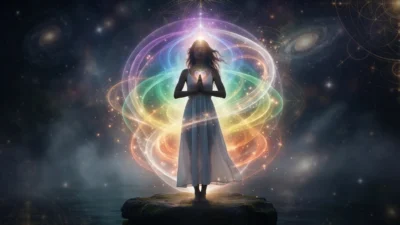
Chakra symbolism represents a rich system of spiritual and cultural ideas surrounding energy, consciousness, emotional qualities, and personal transformation.
However, chakra symbolism has a complex history.
Chakra Symbolism Meaning (Clear Definition)
Chakra symbolism refers to the symbolic meanings associated with chakras, their locations, colors, qualities, sounds, and related spiritual imagery.
Their symbolism provides a framework for thinking about different dimensions of human experience.
A simplified representation is:
| Chakra | Common Color | Symbolic Themes |
|---|---|---|
| Root | Red | Grounding, safety, stability |
| Sacral | Orange | Creativity, pleasure, emotion |
| Solar Plexus | Yellow | Confidence, will, personal power |
| Heart | Green | Love, compassion, connection |
| Throat | Blue | Communication, truth, expression |
| Third Eye | Indigo | Intuition, insight, perception |
| Crown | Violet or white | Consciousness, spirituality, transcendence |
These associations are especially common in contemporary chakra systems. Historical traditions can differ in the number, location, symbolism, and interpretation of chakras.
What Does Chakra Symbolism Represent?
Chakra symbolism commonly represents different dimensions of human experience, from physical grounding and emotional life to communication, intuition, and spiritual awareness.
Rather than treating the chakra system as a single universal map, it is more accurate to understand it as a collection of traditions that have evolved over time.
1. Grounding and Stability
Its symbolism often appears through the color red, earthy imagery, roots, mountains, and strong geometric forms.
2. Creativity and Emotion
Its orange symbolism can represent warmth, movement, enthusiasm, and creative energy.
3. Personal Power
Yellow imagery reinforces themes of brightness, vitality, clarity, and personal strength.
4. Love and Compassion
Its central position in the modern seven-chakra system also makes it a symbolic bridge between physical and spiritual themes.
5. Communication and Truth
Blue represents calmness, openness, and clarity in many contemporary interpretations.
6. Intuition and Insight
7. Spiritual Awareness
Violet, purple, white, and luminous imagery often represent these ideas.
Related concepts include: chakra colors meaning, chakra energy centers, seven chakras, spiritual energy, chakra symbols, kundalini symbolism, and chakra healing symbolism.
Spiritual Meaning of Chakra Symbolism
The spiritual meaning of chakra symbolism centers on awareness, transformation, balance, consciousness, and the relationship between the individual and the larger spiritual world.
Chakras as a Symbolic Journey
This creates a powerful symbolic journey:
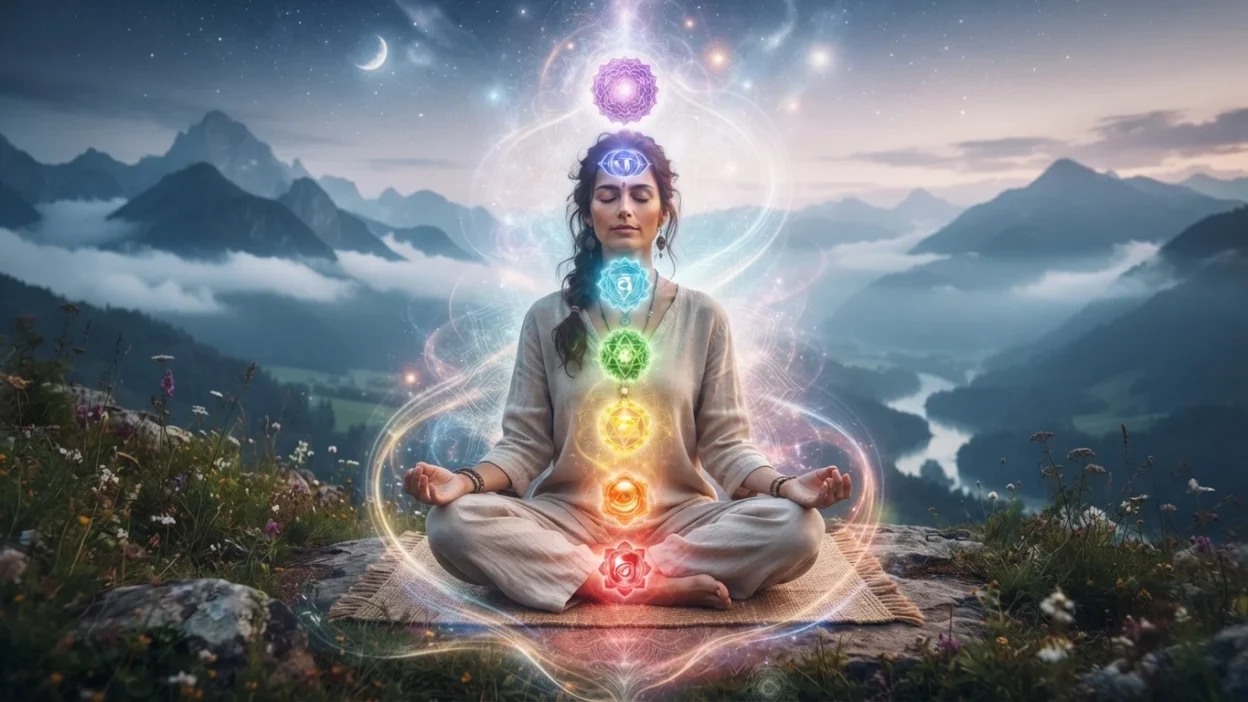
Grounding → creativity → personal power → love → communication → intuition → spiritual awareness
Chakra Symbolism and Inner Transformation
A person may use the chakra framework to reflect on areas such as confidence, relationships, communication, creativity, or spiritual purpose.
In this sense, chakra symbolism becomes a language for self-reflection.
Kundalini and Chakra Symbolism
Modern imagery often depicts kundalini as a coiled serpent rising through the chakra system. Symbolically, the serpent can represent latent spiritual potential and transformative energy.
Biblical / Religious Meaning of Chakra Symbolism
Chakras are not a biblical concept, and the Bible does not present a seven-chakra system.
Chakra concepts developed within South Asian religious and philosophical traditions, especially particular Hindu tantric and yogic systems. Related ideas also appear in different forms within other Indian traditions.
Some modern readers may compare chakra concepts with broader religious ideas such as spiritual discipline, prayer, contemplation, inner transformation, or the pursuit of wisdom. However, these comparisons are interpretive rather than evidence that the traditions teach the same system.
Chakra Symbolism in Hindu Traditions
Chakra concepts are particularly important in certain Hindu tantric and yogic traditions.
Their meanings have varied across texts and schools. Some traditional systems describe different numbers of chakras and assign them distinctive qualities, locations, mantras, deities, elements, or visual forms.
Chakra Symbolism in Buddhist Traditions
Chakra-like subtle-body concepts also appear in some Buddhist tantric traditions, although their terminology, structures, and purposes can differ significantly from popular modern chakra charts.
This historical diversity is important because today’s familiar seven-color chakra system represents only one modern interpretation of a much broader body of traditions.
Chakra Symbolism in History and Culture
Chakra symbolism has roots in the religious and philosophical history of South Asia.
The Sanskrit word chakra means “wheel” or “disc.” Early references to chakra concepts appear in Sanskrit traditions, but the detailed subtle-body systems associated with chakras developed over time.
Different texts and traditions have described different numbers and arrangements of chakras.
The Seven-Chakra System
The seven-chakra model is especially familiar today.
Modern representations usually place the chakras along a vertical pathway through the body and associate them with seven colors.
This presentation has become highly recognizable worldwide, although the historical development of the modern color system is more recent and complex than many popular illustrations suggest.
Chakra Symbols and Geometry
Chakra imagery often includes geometric shapes.
For example, modern representations may use triangles, circles, lotus petals, and symmetrical patterns.
These forms can symbolize balance, unity, movement, consciousness, and the relationship between different levels of existence.
Lotus Petals
Lotus imagery is particularly important in traditional chakra representations.
The lotus itself has longstanding symbolic associations with spiritual development and awakening in South Asian traditions.
Chakra Symbolism in Literature and Art
Chakras provide writers and artists with a visual vocabulary for representing inner states.
Chakra Imagery in Art
Contemporary chakra artwork often combines:
- Vibrant colors
- Lotus flowers
- Sacred geometry
- Human figures
- Serpents
- Light
- Mandalas
- Energy patterns
- Cosmic backgrounds
These elements create imagery associated with transformation and expanded awareness.
Chakra Symbolism in Literature
In literature, chakra imagery may symbolize a character’s emotional or spiritual development.
For example, a story emphasizing the heart chakra may explore love and forgiveness, while third-eye imagery might suggest intuition, hidden knowledge, or a new way of seeing reality.
The symbolic use of chakras allows authors to turn abstract inner experiences into recognizable images.
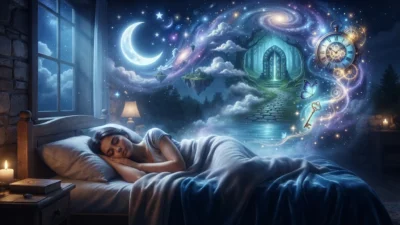
Dream Meaning of Chakra Symbolism
Dreams involving chakras may symbolize self-awareness, emotional balance, personal growth, spiritual curiosity, or a desire to understand hidden aspects of yourself.
Dream symbolism is highly personal, so context matters more than any fixed interpretation.
Dreaming of Glowing Chakras
Seeing glowing or brightly colored chakras in a dream may represent vitality, awareness, hope, or a desire for greater balance.
The specific color may also connect with personal associations.
Dreaming of a Blocked Chakra
A blocked or dark chakra in a dream may symbolize frustration, emotional difficulty, uncertainty, or feeling unable to express an important part of yourself.
It does not necessarily indicate a literal physical or spiritual condition.
Dreaming of All Seven Chakras
Seeing all seven chakras together may represent wholeness, integration, balance, or a desire to bring different areas of life into harmony.
Dreaming of Chakra Colors
A particular chakra color may draw attention to a theme commonly associated with that color in modern chakra symbolism.
For example, green may evoke love and compassion, while blue may suggest communication and truth.
Modern Meaning of Chakra Symbolism
Today, chakra symbolism appears in wellness culture, meditation, yoga, jewelry, artwork, fashion, personal development, and spiritual communities.
The modern interpretation often focuses on energy, emotional balance, mindfulness, self-care, and personal growth.
Chakra Symbolism in Wellness
Many people use chakra concepts as a reflective framework.
Instead of viewing each chakra strictly as a physical structure, they may use the associated themes to think about questions such as:
- Do I feel grounded?
- Am I expressing myself honestly?
- Do I trust myself?
- Am I open to connection?
- Am I listening to my intuition?
- What gives my life meaning?
This approach treats chakra symbolism as a language for introspection.
Chakra Jewelry and Personal Symbolism
Chakra bracelets, necklaces, artwork, and decorative objects often use the seven-color sequence.
For many people, these items serve as reminders of balance, intention, mindfulness, or spiritual identity.
Their meaning is personal and may differ from traditional religious uses of chakra imagery.
Chakra Symbolism in Meditation and Yoga
Modern yoga and meditation communities frequently use chakra imagery to represent different stages or dimensions of awareness.
Visualization practices may focus attention on particular colors, locations, or qualities.
These practices vary widely and should not automatically be treated as equivalent to historical yogic or tantric teachings.
Common Chakra Symbols and Their Meanings
| Symbol | Common Modern Meaning |
|---|---|
| Red | Grounding, security, vitality |
| Orange | Creativity, emotion, pleasure |
| Yellow | Confidence, willpower, personal strength |
| Green | Love, compassion, harmony |
| Blue | Communication, truth, expression |
| Indigo | Intuition, insight, perception |
| Violet | Spirituality, consciousness, transcendence |
| Lotus | Growth, purity, awakening |
| Serpent | Transformation, latent energy, renewal |
| Mandala | Wholeness, balance, contemplation |
These meanings are most familiar within contemporary chakra culture and may differ from specific historical traditions.
Why Is Chakra Symbolism So Powerful?
Chakra symbolism is powerful because it gives abstract experiences a visual structure.
Emotions, thoughts, relationships, confidence, communication, and spiritual questions can be difficult to describe. Colors and symbols make these ideas easier to visualize.
The chakra system also creates a sense of progression.
Starting with grounding and moving toward higher awareness can symbolize a person’s journey through different stages of growth.
For many modern practitioners, the value of chakra symbolism lies less in literal interpretation and more in its ability to encourage reflection.
Is Chakra Symbolism the Same in Every Tradition?
No. Chakra symbolism varies across historical texts, religious traditions, philosophical schools, and modern spiritual movements.
Frequently Asked Questions About Chakra Symbolism
What does chakra symbolism mean?
Chakra symbolism refers to the meanings associated with chakras, including ideas about energy, consciousness, emotional qualities, spiritual development, and personal transformation.
What do the seven chakras symbolize?
The modern seven-chakra system commonly symbolizes grounding, creativity, personal power, love, communication, intuition, and spiritual awareness.
What do chakra colors symbolize?
No. Chakras are not a biblical teaching and developed within South Asian religious and philosophical traditions.
What does chakra symbolism mean in dreams?
Chakra imagery in dreams may symbolize balance, emotional awareness, personal growth, spiritual curiosity, or a desire to understand yourself more deeply.
Conclusion
Chakra symbolism offers a colorful language for exploring ideas about balance, consciousness, emotional life, spiritual development, and transformation. From the lotus and mandala to the seven modern chakra colors, each symbol can invite deeper reflection.
What needs healing? How can I communicate more honestly? And what kind of person am I becoming?