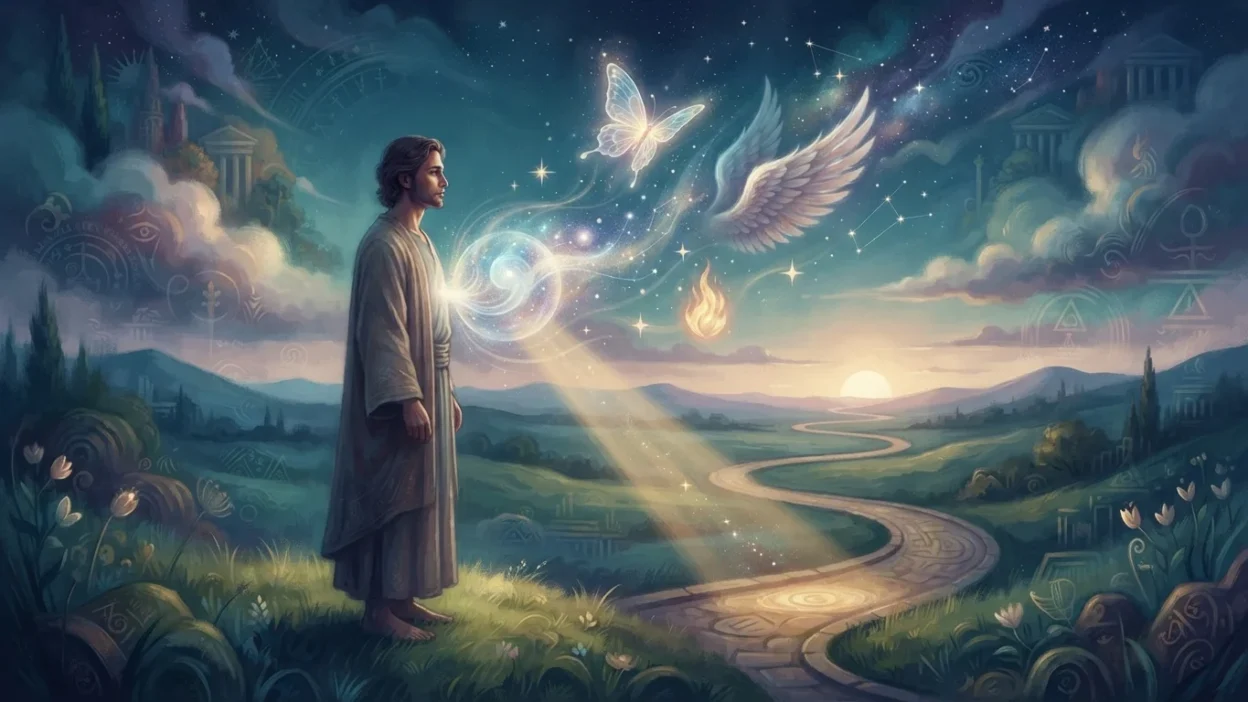
Soul symbolism explores one of the oldest and most meaningful ideas in human culture: the belief that people have an inner essence beyond the physical body.
Across religions, cultures, literature, art, and dreams, the soul can represent the part of a person that feels timeless, personal, and difficult to define. It may symbolize inner truth, spiritual connection, love, courage, wisdom, or the search for meaning.
Understanding soul symbolism can help us interpret stories, religious imagery, dreams, artwork, and everyday expressions. While beliefs about the soul differ greatly, the symbol often points toward something deeper than physical existence.
Soul Symbolism Meaning (Clear Definition)
Soul symbolism refers to the use of the soul as a symbol of a person’s inner essence, spiritual identity, consciousness, morality, and connection to something greater than the physical world.
The exact meaning of the soul depends on the context. In one tradition, it may represent an immortal spiritual essence. In another, it may symbolize consciousness, identity, emotional depth, or the inner self.
Common meanings associated with soul symbolism include:
- Spiritual identity
- Inner self
- Life force
- Consciousness
- Morality
- Love and compassion
- Wisdom
- Eternity
- Personal identity
- Connection with the divine
- Inner truth
- Transcendence
What Does Soul Symbolism Represent?
The soul can represent several deep aspects of human existence. Its meaning often changes according to religious beliefs, cultural traditions, and personal interpretation.
The Inner Self
One of the most common meanings of the soul is the inner self.It can symbolize personality, values, feelings, memories, and the qualities that make someone unique.
Life and Vitality
In many traditions, the presence of a soul represents life, while its departure symbolizes death. This connection makes the soul a natural symbol of vitality, existence, and the mystery of being alive.
Spiritual Identity
Soul symbolism can also represent a person’s spiritual identity.
It may suggest that human beings are more than physical bodies and that their deepest identity exists on a spiritual level.
Morality and Conscience
A “pure soul,” for example, commonly describes someone viewed as kind, compassionate, honest, or morally good.
A troubled soul may symbolize guilt, grief, conflict, or emotional suffering.
Love and Compassion
Expressions such as “soulmate” or “kind soul” connect the soul with love, empathy, friendship, and emotional connection.
Eternity
Because many religious traditions believe that the soul continues after physical death, it can symbolize eternity and spiritual continuation.
This makes soul imagery especially powerful in funerary art, religious traditions, and literature about death and the afterlife.
Spiritual Meaning of Soul Symbolism
For many spiritual traditions, the soul represents the deepest part of a person—the part that connects individual life with something greater.
Soul symbolism may therefore suggest:
- Inner peace
- Spiritual awakening
- Divine connection
- Purpose
- Self-discovery
- Compassion
- Transcendence
- Eternal life
- Inner wisdom
The Soul as a Spiritual Journey
In this interpretation, the soul symbolizes growth rather than a fixed identity.
Soul and Spiritual Awakening
The symbolic soul can represent this movement from confusion toward awareness.
It may suggest looking beyond material concerns and paying greater attention to meaning, compassion, values, and inner truth.
Biblical / Religious Meaning of Soul Symbolism
The concept of the soul appears in many religious traditions, although different religions understand it in different ways.
Biblical language does not always use “soul” in exactly the same way that modern English does, so its meaning depends on the passage and translation.
Soul in Christianity
Christian teachings often emphasize the value of the human soul and its relationship with God.
The soul may symbolize the deepest spiritual condition of a person. Ideas such as salvation, repentance, faith, love, and eternal life therefore become closely connected with soul symbolism.
Soul in Judaism
Jewish traditions contain rich ideas about the human soul and its relationship with God, life, morality, and spiritual responsibility.
The soul can represent the sacred dimension of human existence and the person’s relationship with divine purpose.
Soul in Islam
Soul in Hindu Traditions
Hindu philosophical traditions contain the important concept of atman, commonly understood as the deeper self or spiritual essence.
In many Hindu philosophical interpretations, understanding the true self is central to spiritual liberation.
Soul in Buddhism
Buddhist teachings differ significantly from traditions that emphasize an eternal, unchanging soul.
The Buddhist concept of anatta, or non-self, challenges the idea that there is a permanent independent self. This provides an important contrast in the study of soul symbolism: not every spiritual tradition understands human identity as an eternal soul.
Soul Symbolism in History and Culture
Egyptian funerary practices reflected the importance of preparing for the continuation of existence beyond physical death.
Ancient Greek Ideas
Ancient Greek thinkers explored questions about the soul, mind, life, and identity.
The Greek concept of psyche became especially important in philosophy and later influenced psychological vocabulary.
Soul Symbolism Across Cultures
Different cultures have used symbolic images to represent the soul or spiritual essence.
Common imagery includes:
- Birds representing the soul’s freedom
- Light representing spiritual purity
- Breath representing life
- Butterflies representing transformation
- Fire representing life and spiritual energy
- Water representing purification and renewal
- Wings representing transcendence
- The heart representing emotional or spiritual identity
These symbols are not universal in meaning, but they frequently appear in traditions surrounding life, death, transformation, and spirituality.
Soul Symbolism in Literature and Art
Authors often use the soul to represent identity, morality, love, guilt, innocence, suffering, and the search for meaning.
The Soul as an Inner Landscape
These expressions do not necessarily refer to a literal spiritual object. Instead, they communicate emotional and psychological states.
A restless soul can symbolize someone searching for purpose.
A broken soul can represent deep emotional suffering.
A free soul may symbolize independence and authenticity.
Soul Symbolism in Poetry
Poetry frequently connects the soul with nature.
- A bird
- A flame
- An ocean
- A star
- A garden
- A journey
- A light
These metaphors help poets express feelings that are difficult to describe directly.
Soul Symbolism in Visual Art
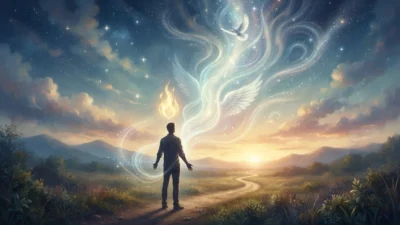
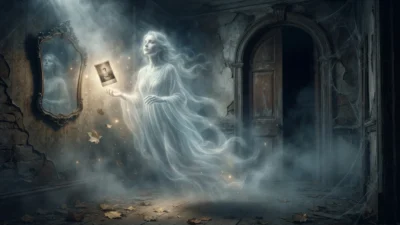
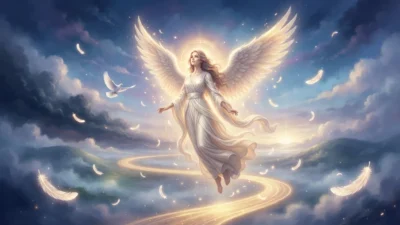
Artists often use wings, halos, light, birds, flames, and human figures to suggest spiritual existence.
A glowing figure may symbolize enlightenment.
A bird leaving the body may represent the soul departing after death.
A butterfly may represent transformation from one stage of existence to another.
Dream Meaning of Soul Symbolism
Dreams involving the soul can feel especially emotional or mysterious. Their meaning is personal, and there is no single interpretation that applies to everyone.
A dream about a bright or peaceful soul may symbolize hope, spiritual comfort, emotional balance, or inner acceptance.
A lost soul may represent uncertainty, loneliness, lack of direction, or a search for meaning.
A dark or troubled soul may symbolize guilt, fear, unresolved emotions, or an internal struggle.
A departing soul may represent change, endings, grief, or the emotional process of letting something go.
Common Soul-Related Dream Symbols
| Dream Symbol | Possible Meaning |
|---|---|
| Bright soul | Hope, purity, spiritual awareness |
| Lost soul | Confusion, loneliness, lack of direction |
| Restless soul | Unresolved emotions or searching |
| Peaceful soul | Acceptance, calm, inner balance |
| Dark soul | Fear, guilt, emotional struggle |
| Departing soul | Change, endings, grief |
| Glowing soul | Awakening, inspiration, spiritual hope |
| Soul returning | Renewal, reconnection, second chances |
Modern Meaning of Soul Symbolism
In modern language, the soul often has both spiritual and metaphorical meanings.
People may use the word to describe personality, authenticity, emotional depth, creativity, or moral character without necessarily expressing a specific religious belief.
For example, someone might say:
“Music feeds my soul.”
This usually means that music provides deep emotional or spiritual satisfaction.
Soul and Authenticity
Modern culture often uses the soul to represent the “real” self.
In this sense, soul symbolism represents authenticity and self-expression.
Soul and Emotional Depth
Words such as soulful, soul-searching, and soul-stirring suggest experiences that affect a person at a profound emotional level.
Soul and Purpose
Modern discussions about purpose often use spiritual language.
Someone searching for meaningful work or a fulfilling life may describe their journey as “finding their soul’s purpose.”
This interpretation connects soul symbolism with values, passion, direction, and personal meaning.
Soul Symbolism and Personal Growth
The soul can symbolize a person’s journey through change.
Life experiences can challenge beliefs, deepen compassion, and reveal new values.
This creates a powerful sequence:
Experience → Reflection → Understanding → Growth → Purpose
The soul therefore does not always symbolize something distant or mysterious. It can also represent the ongoing process of becoming a more conscious and authentic person.
Soul Symbolism at a Glance
| Symbolic Meaning | What It Represents |
|---|---|
| Inner self | Personal identity and deeper character |
| Life force | Vitality and existence |
| Spiritual identity | Connection with the sacred |
| Purity | Moral goodness and innocence |
| Wisdom | Inner understanding |
| Love | Deep emotional connection |
| Eternity | Existence beyond physical life |
| Transformation | Personal and spiritual change |
| Purpose | Meaning and direction |
| Freedom | Release from limitations |
Common Symbols Associated With the Soul
Certain images frequently appear alongside soul symbolism.
Butterfly
The butterfly often represents transformation, renewal, and the movement from one stage of existence to another.
Bird
Birds can symbolize freedom, transcendence, and the soul rising beyond earthly limitations.
Light
Light often represents purity, divine presence, awareness, hope, and spiritual awakening.
Flame
A flame can symbolize life, passion, spiritual energy, or the enduring nature of the inner self.
Wings
Wings commonly represent freedom, ascension, transcendence, and movement toward a higher spiritual state.
Frequently Asked Questions About Soul Symbolism
What does soul symbolism represent?
Soul symbolism commonly represents the inner self, spiritual identity, life force, consciousness, morality, love, and the possibility of existence beyond physical life.
What is the spiritual meaning of the soul?
Spiritually, the soul can represent a person’s deepest connection with the divine, inner truth, spiritual purpose, awareness, and transformation.
What does a soul symbolize in dreams?
A soul in a dream may symbolize identity, emotional states, spiritual questions, grief, transformation, or a search for meaning. The dream’s emotional context is important.
What does a lost soul symbolize?
A lost soul often symbolizes confusion, loneliness, lack of direction, unresolved emotions, or a search for purpose. In literature, it may also represent a character who feels disconnected from life.
What symbols represent the soul?
Common soul symbols include butterflies, birds, light, flames, wings, stars, and spiritual journeys. Their meanings vary across cultures and traditions.
Conclusion
Soul symbolism represents one of humanity’s deepest attempts to understand what lies beneath physical existence. It can symbolize the inner self, spiritual identity, life force, morality, love, wisdom, transformation, and the search for purpose.
Across religion, history, culture, literature, art, dreams, and modern life, the soul continues to provide a language for experiences that are difficult to explain physically.