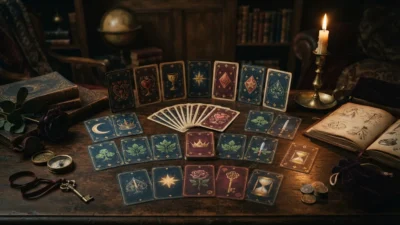
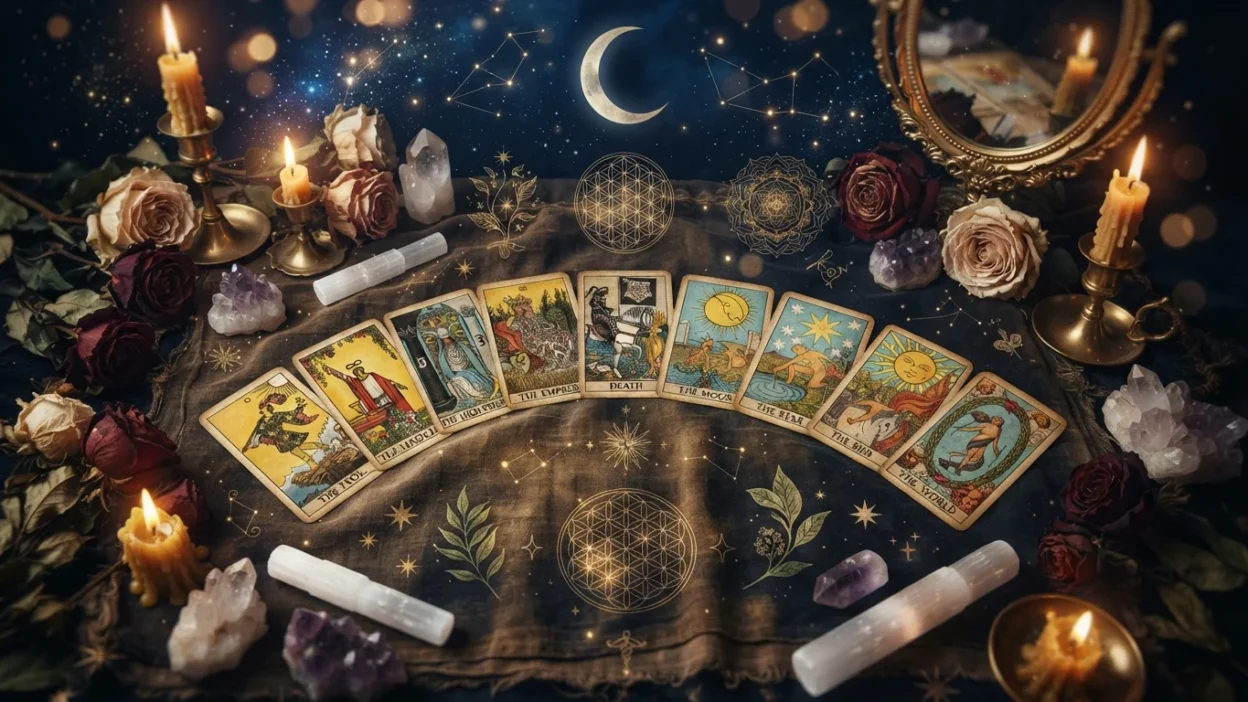
Tarot symbolism is a visual language built from images, numbers, colors, characters, objects, and archetypal themes found throughout tarot cards. Each card contains layers of symbolism that can be interpreted in different ways depending on the reading, surrounding cards, and personal context.
From the mysterious High Priestess to the transformative Death card, tarot imagery has fascinated people for centuries.
Tarot Symbolism Meaning (Clear Definition)
Tarot symbolism refers to the meanings communicated through the images and visual elements found on tarot cards.
In simple terms, tarot cards use symbolic pictures to represent human experiences, emotions, challenges, relationships, choices, and stages of personal development.
Symbols may include:
- Animals representing instincts or qualities
- Water representing emotions or intuition
- Mountains representing challenges or spiritual goals
- Roads representing journeys and choices
- Crowns representing authority or achievement
- Flowers representing growth, beauty, or renewal
- Numbers representing stages, cycles, or patterns
- Colors suggesting different emotional or spiritual qualities
The meaning of a symbol can vary between tarot traditions and individual decks.
What Does Tarot Symbolism Represent?
Tarot symbolism represents many of the universal themes found in human life.
Here is a simple overview:
| Tarot Symbol or Element | Common Symbolic Meaning |
|---|---|
| Fool | Beginnings, freedom, potential |
| Magician | Skill, intention, manifestation |
| High Priestess | Intuition, mystery, inner knowledge |
| Empress | Fertility, creativity, nurturing |
| Emperor | Authority, structure, stability |
| Lovers | Choice, union, relationships |
| Chariot | Determination, direction, control |
| Hermit | Solitude, wisdom, reflection |
| Death | Transformation, endings, renewal |
| Star | Hope, healing, inspiration |
| Moon | Mystery, intuition, uncertainty |
| Sun | Joy, clarity, vitality |
| World | Completion, integration, achievement |
Spiritual Meaning of Tarot Symbolism
Spiritually, tarot symbolism is often associated with self-discovery, intuition, transformation, and inner awareness.
A tarot reading can encourage someone to pause and examine thoughts, emotions, habits, and decisions. The images may act as prompts that help bring unconscious concerns or possibilities into conscious awareness.
- Personal growth
- Inner wisdom
- Intuition
- Transformation
- Life cycles
- Emotional healing
- Self-awareness
- Choices and consequences
For some people, tarot is a spiritual practice. For others, it is primarily a reflective or creative tool. Its symbolism can be meaningful without requiring every card to be understood as a literal prediction of the future.
Biblical / Religious Meaning of Tarot Symbolism
Tarot does not have a direct biblical system of symbolism.
The modern tarot tradition developed in a European cultural environment influenced by Christianity, Renaissance art, medieval imagery, and other philosophical traditions.
Tarot Symbolism in History and Culture
Tarot has a fascinating cultural history.
The imagery found in well-known tarot traditions reflects a mixture of European artistic and cultural influences.
The continued popularity of tarot demonstrates the lasting human fascination with symbolic storytelling.
Tarot Symbolism in Literature and Art
Tarot symbolism has become an important source of inspiration for writers, painters, filmmakers, designers, and other artists.
The cards provide ready-made archetypes that can represent universal human experiences.
The Hermit can represent isolation and wisdom.
The result is a visual language filled with mystery, transformation, romance, danger, hope, and psychological depth.
Dream Meaning of Tarot Symbolism
Dreaming about tarot cards may symbolize a desire for guidance, clarity, self-understanding, or answers about an uncertain situation.
The specific card appearing in a dream can provide additional symbolic clues.
Common interpretations include:
- Dreaming of The Fool — a new beginning, risk, freedom, or uncertainty.
- Dreaming of The Magician — confidence, personal ability, or the desire to take control.
- Dreaming of The High Priestess — intuition, hidden information, or inner wisdom.
- Dreaming of The Death card — transformation, endings, or a major transition.
- Dreaming of The Tower — disruption, unexpected change, or the breakdown of old beliefs.
- Dreaming of The Star — hope, healing, inspiration, or renewed optimism.
- Dreaming of The Moon — uncertainty, dreams, intuition, or hidden emotions.
Dream interpretation is highly personal.
Modern Meaning of Tarot Symbolism
Today, tarot symbolism appears far beyond traditional card readings.
Tarot imagery can be found in:
- Jewelry and tattoos
- Fashion and graphic design
- Social media
- Books and films
- Spiritual practices
- Personal journals
- Meditation
- Contemporary artwork
- Psychology-inspired self-reflection
Modern tarot users often approach the cards in different ways.
A picture of a journey, storm, crown, broken structure, blooming flower, or rising sun can evoke emotions without requiring a long explanation.
This combination of visual storytelling and archetypal meaning gives tarot its enduring appeal.
The Four Tarot Suits and Their Symbolism
Wands
Wands are commonly associated with energy, creativity, ambition, passion, and action.
Cups
Cups traditionally represent emotions, relationships, intuition, love, and the inner world.
Swords
Swords are commonly linked with thought, communication, conflict, decisions, truth, and mental challenges.
Pentacles
Together, these four suits provide a broad symbolic framework for understanding different aspects of everyday experience.
Numbers in Tarot Symbolism
As numbers increase, the cards can portray developing circumstances, challenges, accomplishments, or transitions.
FAQs About Tarot Symbolism
What is the main meaning of tarot symbolism?
Tarot symbolism is the visual language of tarot cards, using images, numbers, colors, objects, and characters to represent human experiences and archetypal themes.
What do tarot cards symbolize?
Tarot cards can symbolize emotions, choices, relationships, personal challenges, transformation, beginnings, endings, and spiritual or psychological themes.
What does the Death card symbolize in tarot?
What does The Moon symbolize in tarot?
The Moon commonly represents intuition, mystery, uncertainty, dreams, hidden emotions, and situations that may not yet be completely understood.
Is tarot symbolism religious?
Tarot is not inherently part of one religion.
Conclusion
Tarot symbolism transforms simple card images into a rich language of human experience. From beginnings and choices to transformation and renewal, tarot imagery provides symbols that encourage reflection on life’s many possibilities.

Thomas Luke is a dedicated symbolism writer at Symblosim.com, exploring symbol meanings, cultural traditions, spiritual symbolism, and historical interpretations. He creates insightful content that helps readers uncover the stories and significance behind symbols.