
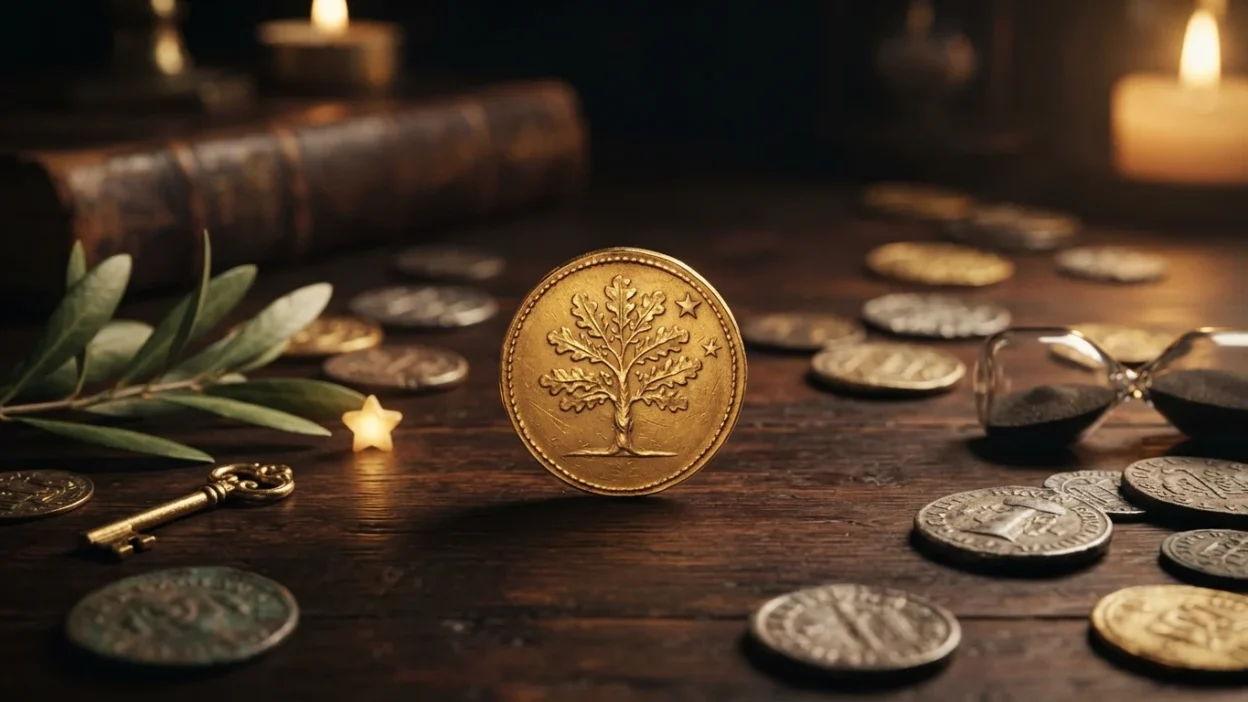
Coin symbolism connects ordinary coins with deeper ideas such as wealth, prosperity, luck, opportunity, generosity, value, and the passage of time. Coins have traveled through human history as practical objects of exchange, but their meanings often extend far beyond money.
A coin can represent something earned, something lost, or an opportunity waiting to be discovered. Because coins are carried, exchanged, collected, gifted, and sometimes buried or placed as offerings, they have developed rich symbolic meanings across cultures.
Coin Symbolism Meaning (Clear Definition)
Coin symbolism refers to the deeper meanings associated with coins, currency, monetary value, and the physical act of giving, receiving, finding, saving, or spending money.
In simple terms, coins often symbolize value and exchange. However, their symbolic meaning can also extend to luck, abundance, power, identity, memory, and personal worth.
Common coin symbolism includes:
- Wealth — financial resources and material security
- Prosperity — growth, abundance, and success
- Luck — unexpected fortune or favorable circumstances
- Opportunity — a chance to gain or achieve something
- Value — the worth of an object, person, or experience
- Exchange — giving and receiving
- Generosity — sharing resources with others
- Memory — preserving connections to people or places
The meaning of a coin depends on its cultural setting and the circumstances in which it appears.
What Does Coin Symbolism Represent?
Coin symbolism represents much more than financial wealth.
Because coins have measurable monetary value, they naturally become symbols of what people consider valuable. At the same time, their small size and long history allow them to become personal reminders of experiences, relationships, journeys, and important moments.
| Coin Symbol | Common Symbolic Meaning |
|---|---|
| Gold coin | Wealth, success, abundance |
| Silver coin | Intuition, clarity, protection |
| Old coin | History, memory, ancestry |
| New coin | New opportunity, fresh beginnings |
| Found coin | Luck, unexpected opportunity |
| Gifted coin | Generosity, blessing, connection |
| Lost coin | Missed opportunity or forgotten value |
| Two coins | Partnership, balance, exchange |
| Coin with a face | Identity, authority, legacy |
| Coin tossed in water | Wishes, hope, offering |
| Coin collection | Memory, achievement, heritage |
| Broken or damaged coin | Loss, change, diminished value |
These are common symbolic interpretations rather than universal rules.
Spiritual Meaning of Coin Symbolism
Spiritually, coin symbolism is often associated with abundance, gratitude, blessings, opportunity, and the recognition of personal value.
Finding a coin may feel meaningful because it appears unexpectedly. Some people interpret such moments as signs of good fortune, encouragement, or a reminder to appreciate what they already possess.
Coins can also symbolize the idea of energetic exchange. Giving something may represent generosity, while receiving something can represent openness to support.
Common spiritual meanings include:
- Abundance
- Prosperity
- Gratitude
- Blessings
- Protection
- Opportunity
- Generosity
- Personal worth
- Positive change
For some people, a coin becomes meaningful because of the emotion attached to it rather than because of the coin itself.
Biblical / Religious Meaning of Coin Symbolism
Coins appear in several important biblical stories and religious teachings.
One well-known example is the Parable of the Lost Coin, in which a woman searches carefully for a lost coin and celebrates after finding it. Symbolically, the story emphasizes the value of what was lost and the joy of restoration.
Another famous biblical reference concerns the widow’s offering, where a poor widow gives two small coins. The story emphasizes that generosity is not measured simply by the size of a financial gift but by the spirit and sacrifice behind it.
Coins can therefore symbolize:
- Value
- Generosity
- Stewardship
- Responsibility
- Loss and recovery
- Compassion
- Moral choices concerning wealth
Religious interpretations of money are often concerned not only with possessing wealth but with how people use their resources and treat others.
Coin Symbolism in History and Culture
Coins have played important roles in civilizations around the world.
Beyond their economic purpose, coins have carried images of rulers, gods, national symbols, important buildings, animals, and cultural ideals. A coin could communicate political authority and national identity as effectively as it facilitated trade.
Ancient coins are especially valuable to historians because their designs can reveal information about governments, rulers, beliefs, artistic styles, and cultural values.
Coins have also been used in ceremonies and traditions.
People have placed coins in foundations, carried them for luck, given them as gifts, or kept particular coins as reminders of important experiences.
The symbolic power of coins therefore comes partly from their ability to connect personal value with collective history.
Coin Symbolism in Literature and Art
Coins frequently appear in literature and art as symbols of wealth, greed, temptation, generosity, poverty, power, and destiny.
A handful of coins can represent financial hardship. A treasure chest filled with coins can symbolize ambition or material desire. A single coin may represent a difficult choice or the last remaining resource of a character.
Writers may also use coins metaphorically.
A character “spending” their last coin can represent desperation, while finding money can signal unexpected opportunity. A coin passed from one person to another can represent inheritance, memory, or an enduring relationship.
In visual art, coins can communicate social status and economic power while also raising questions about what humans consider truly valuable.
Dream Meaning of Coin Symbolism
Dreaming about coins often relates to value, opportunity, money, self-worth, luck, and personal resources.
The circumstances of the dream can significantly change its interpretation.
Common possibilities include:
- Finding coins — unexpected opportunity, luck, or discovering hidden value
- Losing coins — fear of loss, insecurity, or missed opportunities
- Receiving coins — support, recognition, or an incoming opportunity
- Giving coins away — generosity, emotional investment, or letting go
- Collecting coins — building resources, preserving memories, or pursuing security
- Gold coins — ambition, success, prosperity, or confidence
- Silver coins — intuition, emotional value, or reflection
- Old coins — memories, ancestry, or unresolved connections with the past
- Counting coins — concerns about finances, resources, or personal worth
Dreams are personal, so the meaning of a coin may depend strongly on your emotions and current circumstances.
Modern Meaning of Coin Symbolism
In modern society, coins continue to symbolize money, independence, financial security, luck, and personal achievement.
Although digital payments have reduced the everyday importance of physical coins in many places, coins still have emotional and cultural significance.
People may collect commemorative coins, keep inherited coins, carry lucky coins, or display coins from places they have visited.
A coin can also represent a personal milestone. The first money someone earns, a coin inherited from a family member, or currency from a memorable journey can carry emotional value far beyond its face value.
This distinction between financial value and emotional value is one of the most important aspects of modern coin symbolism.
Finding a Coin: Spiritual and Symbolic Meaning
Finding a coin unexpectedly is one of the most familiar forms of coin symbolism.
Many people associate a found coin with luck or a positive sign. Symbolically, it may represent noticing value in an unexpected place.
Possible interpretations include:
- A reminder to remain hopeful
- An unexpected opportunity
- Recognition of something previously overlooked
- A moment of gratitude
- A reminder of personal worth
- A symbolic connection to someone or something meaningful
The year, design, location, and personal associations of the coin may make the experience especially significant.
Coin Symbolism and Personal Value
Coins provide an interesting metaphor for human worth.
A coin has a stated monetary value, but its sentimental value can be completely different. An ordinary coin may become priceless if it belonged to someone important or was connected to a meaningful memory.
This creates a useful symbolic distinction:
Price is measurable, but value can be deeply personal.
Coin symbolism can therefore encourage reflection on what we truly value—not only financially, but emotionally, socially, and spiritually.
Why Are Coins Powerful Symbols?
Coins are powerful symbols because they combine value, history, exchange, identity, and memory in a small physical object.
They can pass from one person to another and survive for decades or centuries. A single coin may have traveled through many hands before becoming part of someone’s personal collection.
That journey makes coins natural symbols of continuity and connection.
They remind us that something small can carry a story much larger than itself.
FAQs About Coin Symbolism
What does coin symbolism mean?
Coin symbolism commonly represents wealth, prosperity, luck, opportunity, value, generosity, and exchange. Its meaning depends on cultural and personal context.
What does finding a coin symbolize?
Finding a coin is often associated with luck, unexpected opportunity, abundance, or discovering value where it was not previously noticed.
What do coins symbolize spiritually?
Spiritually, coins can symbolize blessings, abundance, gratitude, prosperity, generosity, and personal worth. Some people also see found coins as meaningful signs.
What does dreaming about coins mean?
Dreaming about coins may relate to money, self-worth, opportunities, resources, or concerns about losing or gaining something valuable.
What does a gold coin symbolize?
A gold coin commonly symbolizes wealth, success, abundance, achievement, power, and something considered especially valuable.
Conclusion
Coin symbolism reveals how a simple object associated with money can represent much deeper ideas about value, luck, prosperity, generosity, memory, and opportunity. Across history, coins have carried not only financial worth but also stories of people, cultures, relationships, and important moments.
Ultimately, a coin reminds us that value is not always measured by price. Sometimes the smallest object can hold the richest meaning.