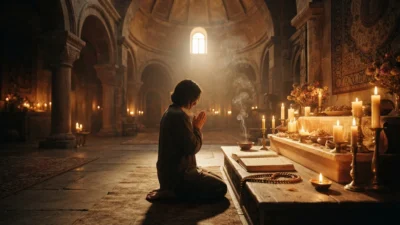
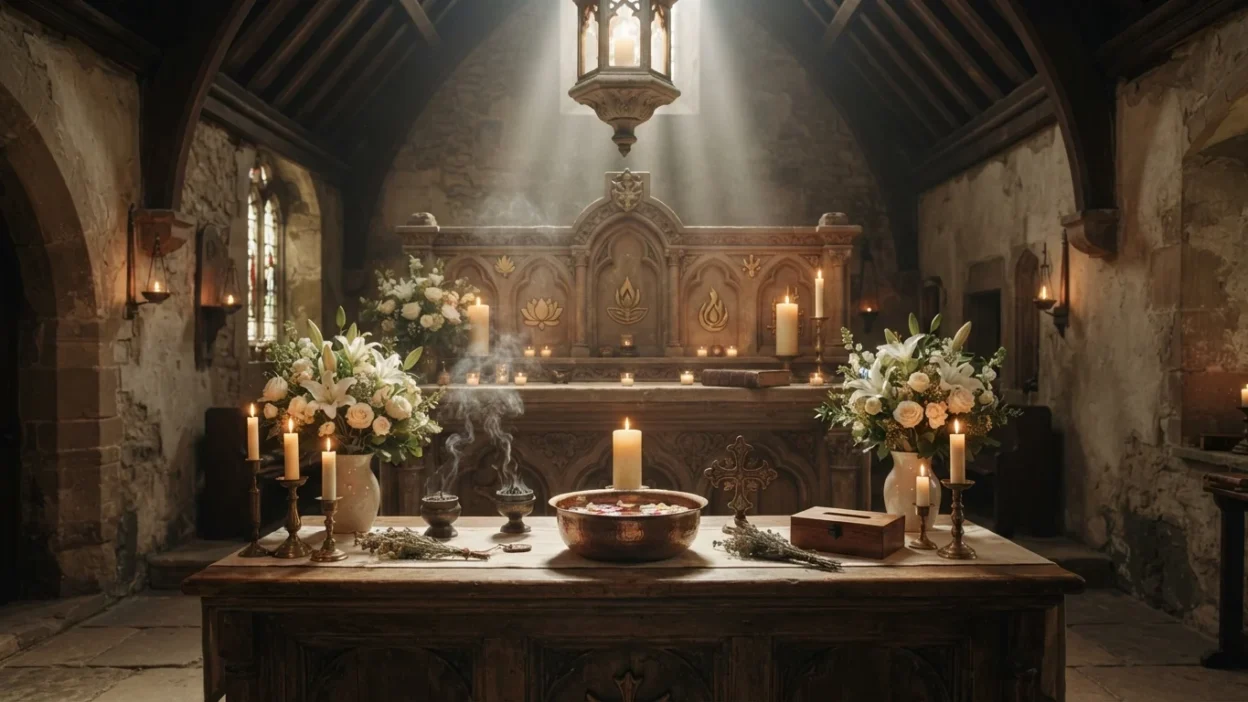
Altar symbolism is deeply connected with devotion, sacrifice, prayer, remembrance, transformation, and a connection between the human and the sacred. Across religions and cultures, an altar creates a meaningful space where people express faith, honor divine beings, remember loved ones, or mark important spiritual moments.
Although altars can look very different—from simple stones and wooden tables to elaborate religious structures—their symbolic purpose often remains similar: they create a dedicated place for something considered sacred or deeply meaningful.
Altar Symbolism Meaning (Clear Definition)
Altar symbolism refers to the meanings associated with an altar as a sacred or ceremonial place. An altar can represent devotion, sacrifice, worship, offering, prayer, remembrance, protection, and spiritual connection.
In simple terms, an altar symbolizes a meeting point between the ordinary and the sacred. It gives physical form to an invisible intention such as faith, gratitude, love, repentance, or hope.
The meaning can change depending on the religious tradition and cultural setting. A church altar, for example, may have a specific theological meaning, while a personal altar may represent meditation, remembrance, or spiritual reflection.
Common symbolic meanings of an altar
| Symbolic Meaning | What It Can Represent |
|---|---|
| Devotion | Commitment to faith or a spiritual path |
| Sacrifice | Giving something valuable for a higher purpose |
| Offering | Gratitude, prayer, or a gift to the sacred |
| Worship | Reverence toward God or a divine presence |
| Remembrance | Honoring ancestors or loved ones |
| Transformation | Personal change, renewal, or spiritual growth |
| Connection | A symbolic bridge between the human and sacred worlds |
| Protection | A sacred space associated with safety and blessing |
What Does Altar Symbolism Represent?
At its heart, an altar represents dedication. Creating or approaching an altar can express the idea that something deserves special attention, respect, and care.
1. Sacrifice
One of the oldest meanings associated with altars is sacrifice. Historically, offerings placed upon an altar could symbolize giving something valuable in recognition of a deity, a spiritual power, or a sacred obligation.
In a broader symbolic sense, sacrifice can mean surrendering comfort, time, pride, or personal desire for something considered more important.
2. Offering and Gratitude
An altar may represent an offering given with gratitude. Flowers, food, candles, incense, written prayers, or symbolic objects can communicate appreciation and devotion.
The physical offering often matters less than the intention behind it.
3. Prayer and Worship
Altars provide a focal point for prayer and worship. They can help transform an ordinary location into a space where people intentionally pause, reflect, and connect with their beliefs.
4. Remembrance
Altars can also symbolize memory. Memorial altars, for example, allow people to honor someone who has died by displaying photographs, flowers, candles, or meaningful possessions.
Here, the altar becomes a physical expression of love that continues beyond physical separation.
5. Transformation
An altar can symbolize a turning point. In stories and spiritual traditions, approaching an altar may represent leaving an old way of life behind and beginning a new one.
This makes the altar a powerful symbol of renewal, commitment, and personal transformation.
Spiritual Meaning of Altar Symbolism
The spiritual meaning of an altar often centers on connection with the sacred.
An altar can create a deliberate boundary between everyday activities and spiritual practice. Entering or approaching that space encourages stillness, attention, humility, and reflection.
For many people, an altar symbolizes a place where intentions become visible. A private prayer may be invisible, but placing a candle, flower, sacred text, or meaningful object on an altar gives that intention a physical presence.
Altar symbolism can spiritually represent:
- Faith and devotion
- Prayer and contemplation
- Divine presence
- Gratitude
- Surrender
- Spiritual protection
- Healing and renewal
- Remembrance
- Hope and guidance
- Commitment to a sacred purpose
The altar therefore does not simply symbolize a physical object. It can represent the relationship between a person and what they consider sacred.
Biblical / Religious Meaning of Altar Symbolism
Altars have an important place in the Bible and in several religious traditions. In biblical narratives, altars are frequently associated with worship, sacrifice, covenant, thanksgiving, and encounters with God.
Figures such as Noah, Abraham, Isaac, Jacob, Moses, and other biblical figures are associated with altars or altar-building.
In the Hebrew Bible, an altar could serve as a place for offerings and worship. It could also commemorate an important encounter or act of divine guidance.
Within Christianity, the altar developed additional significance through Christian worship and the Eucharist. In many churches, it serves as a central sacred point associated with prayer, communion, sacrifice, and the remembrance of Christ.
In other religions, altars likewise have distinctive meanings. Hindu traditions may use altar spaces for offerings and devotion, while Buddhist settings may feature arrangements of sacred images and offerings. Shinto traditions can include sacred spaces and offerings associated with kami.
Because religious traditions differ, altar symbolism should always be understood within its specific theological and cultural context.
Altar Symbolism in History and Culture
The history of altars stretches back thousands of years. Ancient societies used designated spaces for offerings, ceremonies, prayers, and communication with divine or supernatural powers.
Altars appeared in different forms across ancient civilizations, including the Greek, Roman, Egyptian, Mesopotamian, and ancient Israelite worlds.
Their materials also carried meaning. Stone could suggest permanence and strength. Wood could connect a sacred space with nature. Precious metals and elaborate decoration could express honor and reverence.
In many cultures, the altar became more than a place for ritual. It could serve as a community symbol, marking shared beliefs, important ceremonies, and collective identity.
Memorial traditions also demonstrate how altar symbolism evolved. A temporary or permanent arrangement of photographs, flowers, candles, food, and personal objects can turn remembrance into a visible ritual.
The specific meaning always depends on the culture. There is no single universal altar tradition.
Altar Symbolism in Literature and Art
Altars are powerful symbols in literature because they can represent decisions, sacrifice, faith, devotion, and irreversible commitments.
A character standing before an altar may be facing a major transformation. A wedding altar, for example, can symbolize commitment and the beginning of a new life stage.
An abandoned altar can suggest lost faith, forgotten traditions, or the collapse of an old belief system. A damaged altar may symbolize spiritual crisis or conflict.
Artists have also used altars to explore religious devotion, death, memory, identity, and transcendence.
Because an altar is both physical and symbolic, it can communicate complex ideas without requiring extensive explanation.
Dream Meaning of Altar Symbolism
Dreaming about an altar can have several possible interpretations. Its meaning depends strongly on the dreamer’s emotions, beliefs, and the events surrounding the altar.
An altar in a dream may symbolize devotion, commitment, sacrifice, spiritual reflection, or an important life transition.
Common altar dream interpretations
Standing before an altar: You may be facing an important decision, commitment, or personal transformation.
Praying at an altar: This may reflect a desire for guidance, peace, forgiveness, or spiritual connection.
A beautiful altar: It can symbolize harmony, hope, devotion, or a sense of spiritual fulfillment.
A broken altar: It may represent disappointment, uncertainty, a disrupted belief, or a relationship that needs attention.
Lighting candles on an altar: This can symbolize hope, remembrance, intention, or seeking clarity.
An abandoned altar: It may suggest neglected values, forgotten commitments, or a spiritual part of life that needs renewed attention.
Dream symbolism is personal rather than absolute, so the emotions experienced during the dream are often as important as the image itself.
Modern Meaning of Altar Symbolism
Today, altars can be found in both religious and personal settings. Their meaning has expanded beyond formal worship.
A modern personal altar might include photographs, plants, candles, meaningful objects, artwork, books, or items connected with personal goals. Such spaces can encourage meditation, gratitude, reflection, or remembrance.
A wedding altar can symbolize commitment and partnership. A memorial altar can represent continuing love and remembrance. A community altar can express shared identity and collective memory.
In modern life, the altar can therefore symbolize the simple idea of making space for what matters most.
It can remind people that attention itself can be meaningful. When something is intentionally placed in a sacred or special space, it becomes a visual reminder of the values, relationships, memories, or hopes a person wants to honor.
Altar Symbolism in Different Contexts
The same altar can carry different meanings depending on its purpose.
- Religious altar: Worship, sacrifice, prayer, communion, and divine connection.
- Wedding altar: Love, commitment, partnership, and a new beginning.
- Memorial altar: Remembrance, grief, love, and continuing connection.
- Personal altar: Reflection, meditation, intention, and spiritual practice.
- Ceremonial altar: Ritual, transition, community, and sacred observance.
- Literary altar: Sacrifice, commitment, conflict, or transformation.
- Dream altar: Personal values, decisions, spiritual concerns, or major life transitions.
Why Is Altar Symbolism So Powerful?
Altar symbolism is powerful because it transforms an abstract idea into something visible.
Faith, memory, gratitude, love, sacrifice, and hope are difficult to touch or see. An altar gives these ideas a physical location.
That physical presence can make rituals feel more intentional. It can also help people remember what they value, especially during moments of change, grief, celebration, or uncertainty.
Ultimately, the altar symbolizes attention given to something greater than ordinary daily concerns.
Frequently Asked Questions About Altar Symbolism
What is the main symbolism of an altar?
An altar primarily symbolizes devotion, offering, sacrifice, worship, and connection with the sacred. Its exact meaning varies according to religion, culture, and personal context.
What does an altar symbolize spiritually?
Spiritually, an altar can represent a meeting place between the human and sacred realms. It may symbolize prayer, surrender, gratitude, transformation, protection, or divine connection.
What does an altar symbolize in the Bible?
In the Bible, altars are commonly associated with worship, offerings, sacrifice, thanksgiving, covenant, and encounters with God. Their meaning develops across different biblical narratives and religious contexts.
What does an altar symbolize in a dream?
A dream altar may symbolize commitment, spiritual reflection, sacrifice, an important decision, or personal transformation. The dreamer’s feelings and circumstances provide important clues to its interpretation.
What does an altar symbolize in modern life?
In modern life, an altar can symbolize remembrance, personal values, meditation, commitment, or creating a dedicated space for reflection. Its meaning can be religious, cultural, ceremonial, or deeply personal.
Conclusion
Altar symbolism ultimately points to devotion, sacrifice, remembrance, and the human desire to connect with something sacred or deeply meaningful. Whether found in a place of worship, a ceremony, a work of art, or a personal space, the altar reminds us to pause and honor what we value most.