Prayer symbolism is connected with faith, hope, humility, communication, gratitude, guidance, and the desire to connect with something greater than ourselves. Across religions and cultures, prayer can be expressed through words, silence, gestures, posture, sacred objects, or private reflection.
Although prayer practices differ widely, their symbolic purpose often centers on connection.
Prayer symbolism refers to the meanings represented by prayer, including faith, devotion, surrender, gratitude, hope, repentance, guidance, and spiritual connection.
In simple terms, prayer symbolizes the act of turning one’s attention toward something greater than the self. It can express a request for help, an expression of thanks, a search for wisdom, or a moment of quiet reflection.
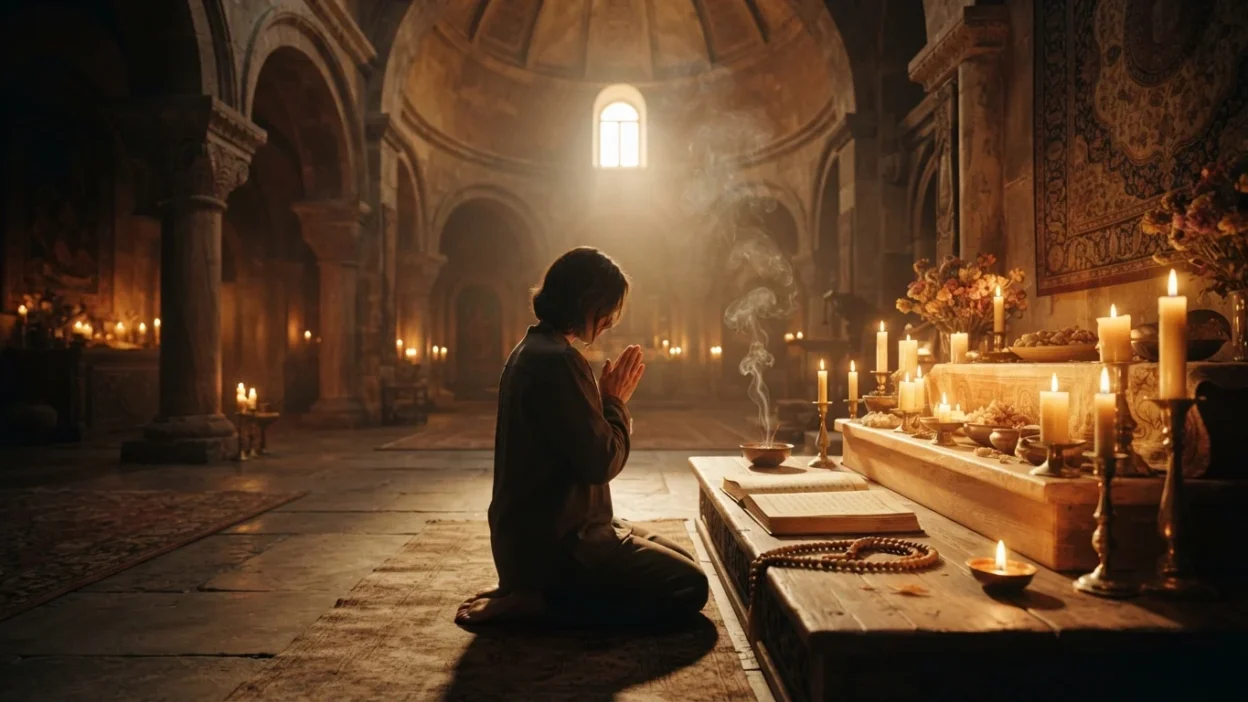
Prayer does not always require spoken words. Silence, meditation, kneeling, folded hands, bowed heads, raised arms, or lighting a candle can all become symbolic expressions of prayer.
Common symbolic meanings of prayer
| Symbolic Meaning | What It Represents |
|---|---|
| Faith | Trust in a higher power or spiritual truth |
| Hope | Belief that circumstances can improve |
| Gratitude | Appreciation for blessings and experiences |
| Humility | Recognition of human limitations |
| Surrender | Releasing control and accepting uncertainty |
| Guidance | Seeking wisdom or direction |
| Repentance | Acknowledging mistakes and seeking renewal |
| Connection | Communicating with the sacred or divine |
What Does Prayer Symbolism Represent?
Prayer can represent many emotional and spiritual experiences. Its meaning depends on the tradition, intention, and circumstances surrounding the act.
1. Faith and Trust
Prayer often symbolizes trust. When people pray, they may express confidence that a higher power hears, understands, or provides guidance.
This symbolism can be especially meaningful during uncertain or difficult periods.
2. Hope
Prayer is closely associated with hope. Asking for healing, strength, peace, protection, or a better future can symbolize the belief that change remains possible.
3. Humility
The act of praying can represent humility because it acknowledges that people do not control everything. Prayer may symbolize the willingness to seek wisdom beyond personal knowledge.
4. Gratitude
Prayer can also be an expression of thanksgiving. Instead of asking for something, a person may pray simply to recognize blessings, relationships, opportunities, or moments of peace.
5. Surrender
Sometimes prayer represents letting go. Rather than attempting to control every outcome, prayer can symbolize acceptance and surrender to a higher purpose.
6. Guidance
Prayer may represent a search for direction. People often turn to prayer when making difficult decisions or trying to understand an uncertain situation.
Spiritual Meaning of Prayer Symbolism
The spiritual meaning of prayer centers on connection, intention, and inner transformation.
For many believers, prayer is more than asking for something. It creates a moment of stillness in which a person can reflect on beliefs, emotions, responsibilities, and hopes.
Prayer can also symbolize an inner journey. Someone may begin prayer feeling anxious, confused, or discouraged and finish with a greater sense of peace or clarity.
Prayer can spiritually symbolize:
- Divine connection
- Inner peace
- Faith and trust
- Hope during hardship
- Spiritual protection
- Forgiveness
- Gratitude
- Wisdom and guidance
- Emotional surrender
- Personal transformation
The symbolic power of prayer often comes from its ability to turn attention away from immediate distractions and toward deeper meaning.
Biblical / Religious Meaning of Prayer Symbolism
Prayer has a central role in many religious traditions, although its form and theology differ.
In Christianity, prayer is commonly understood as communication with God. The Bible contains many forms of prayer, including praise, thanksgiving, confession, intercession, lament, and requests for guidance.
The Lord’s Prayer, recorded in the New Testament, is one of Christianity’s best-known models of prayer. It combines reverence for God, requests for daily provision, forgiveness, and spiritual protection.
In Judaism, prayer is an important part of worship, reflection, thanksgiving, and communal religious life. Jewish prayer traditions include both personal devotion and structured liturgical practices.
In Islam, prayer has a central place in religious life. Salah includes specific physical postures and recitations, giving bodily movement symbolic meaning alongside spoken devotion.
Hindu traditions contain diverse forms of prayer, mantra, meditation, and devotional practice. Prayer may be directed toward particular deities or expressed through broader spiritual disciplines.
Buddhist traditions vary, and practices may include chanting, meditation, bows, aspirations, and devotional expressions. Their meanings depend on the particular Buddhist tradition.
These differences show why prayer symbolism cannot be reduced to one universal interpretation. Its significance is shaped by theology, culture, ritual, and personal belief.
Prayer Symbolism in History and Culture
Prayer has existed in many forms throughout human history. Ancient communities used spoken prayers, songs, offerings, gestures, and sacred ceremonies to express relationships with divine or supernatural forces.
Archaeological evidence from ancient civilizations shows that religious communities developed dedicated practices for communicating with their gods and honoring sacred powers.
The physical posture of prayer has also carried symbolic meaning.
Kneeling can express humility or submission. Bowing may communicate reverence. Raised hands can symbolize praise, supplication, or openness. Folded hands can represent concentration, devotion, or reverence in certain cultural contexts.
Prayer beads have also become important symbolic objects in several religious traditions. Their repeated use can help structure prayer, remembrance, or meditation.
Across cultures, these practices demonstrate a common human desire to give physical form to spiritual intention.
Prayer Symbolism in Literature and Art
Prayer is a powerful symbol in literature because it can reveal a character’s deepest hopes and fears.
A character praying may be seeking forgiveness, protection, courage, healing, or an answer to a difficult question. The prayer itself can expose emotions that the character cannot express openly to other people.
In literature, unanswered prayer can symbolize doubt, suffering, silence, or a crisis of faith. A sudden response to prayer can symbolize hope, revelation, transformation, or renewed belief.
Artists have likewise portrayed prayer through kneeling figures, clasped hands, bowed heads, sacred spaces, candles, religious imagery, and moments of quiet solitude.
The visual language of prayer often communicates vulnerability and hope at the same time.
Dream Meaning of Prayer Symbolism
Dreaming about prayer may have several possible meanings. The interpretation depends on the dreamer’s emotions, beliefs, experiences, and the details of the dream.
Prayer in a dream may symbolize a desire for help, emotional comfort, spiritual guidance, forgiveness, protection, or hope.
Common prayer dream interpretations
Praying for someone else: This can symbolize care, compassion, responsibility, or concern for another person.
Unable to pray: This may represent feelings of spiritual doubt, helplessness, emotional blockage, or difficulty expressing inner concerns.
Hearing someone pray: It could symbolize a need for guidance, reassurance, or connection with others.
Praying in a sacred place: This may represent a desire for safety, meaning, belonging, or spiritual renewal.
Dream interpretation is personal, so the emotional atmosphere of the dream is often more important than any fixed symbolic dictionary.
Modern Meaning of Prayer Symbolism
In modern life, prayer continues to symbolize hope, reflection, connection, and resilience.
People may pray in formal religious settings, at home, during ceremonies, before important events, or privately during moments of uncertainty.
Prayer can also overlap with modern practices such as meditation, mindfulness, journaling, and quiet reflection. While these practices are not identical to prayer, they can share the symbolic idea of creating intentional space for inner awareness.
For many people, prayer is particularly meaningful during major life events such as illness, loss, marriage, childbirth, conflict, personal change, or periods of uncertainty.
Its modern symbolism therefore extends beyond requesting an outcome. Prayer can be a way of remembering values, expressing gratitude, processing emotions, and finding strength.
Prayer Symbols and Their Meanings
Different objects and gestures can deepen the symbolic meaning of prayer.
- Folded hands: Devotion, concentration, humility, or reverence.
- Kneeling: Submission, humility, worship, or surrender.
- Bowed head: Respect, contemplation, and humility.
- Raised hands: Praise, supplication, openness, or celebration.
- Prayer beads: Repetition, remembrance, meditation, and devotion.
- Candles: Hope, spiritual light, remembrance, and guidance.
- Sacred texts: Divine wisdom, teaching, and spiritual authority.
- Silence: Contemplation, listening, peace, and inward reflection.
The meaning of each symbol depends on the religious and cultural tradition in which it appears.
Frequently Asked Questions About Prayer Symbolism
What is the main symbolism of prayer?
Prayer primarily symbolizes faith, hope, communication, humility, gratitude, and spiritual connection. It can also represent a person’s desire for guidance or comfort.
What does prayer symbolize spiritually?
Spiritually, prayer can symbolize connection with the divine, inner peace, surrender, guidance, forgiveness, and personal transformation. Its meaning varies according to individual beliefs and religious traditions.
What does prayer symbolize in the Bible?
Biblical prayer can symbolize communication with God through praise, thanksgiving, confession, requests, intercession, and seeking guidance. It is presented in many different forms throughout biblical narratives.
What does praying in a dream symbolize?
Praying in a dream may symbolize a need for help, hope, forgiveness, guidance, or emotional comfort. The specific meaning depends on the dreamer’s feelings and personal circumstances.
Why is prayer a powerful symbol?
Prayer is powerful because it gives visible or verbal form to invisible emotions such as hope, faith, gratitude, fear, and love. It creates a meaningful moment of connection between inner experience and spiritual belief.
Conclusion
Prayer symbolism ultimately represents the human desire to connect, hope, trust, reflect, and find meaning beyond immediate circumstances. Whether expressed through words, silence, gestures, or ritual, prayer can become a powerful symbol of faith and inner strength.
At its deepest level, prayer reminds us that even in moments of uncertainty, people continue to seek light, guidance, peace, and connection.