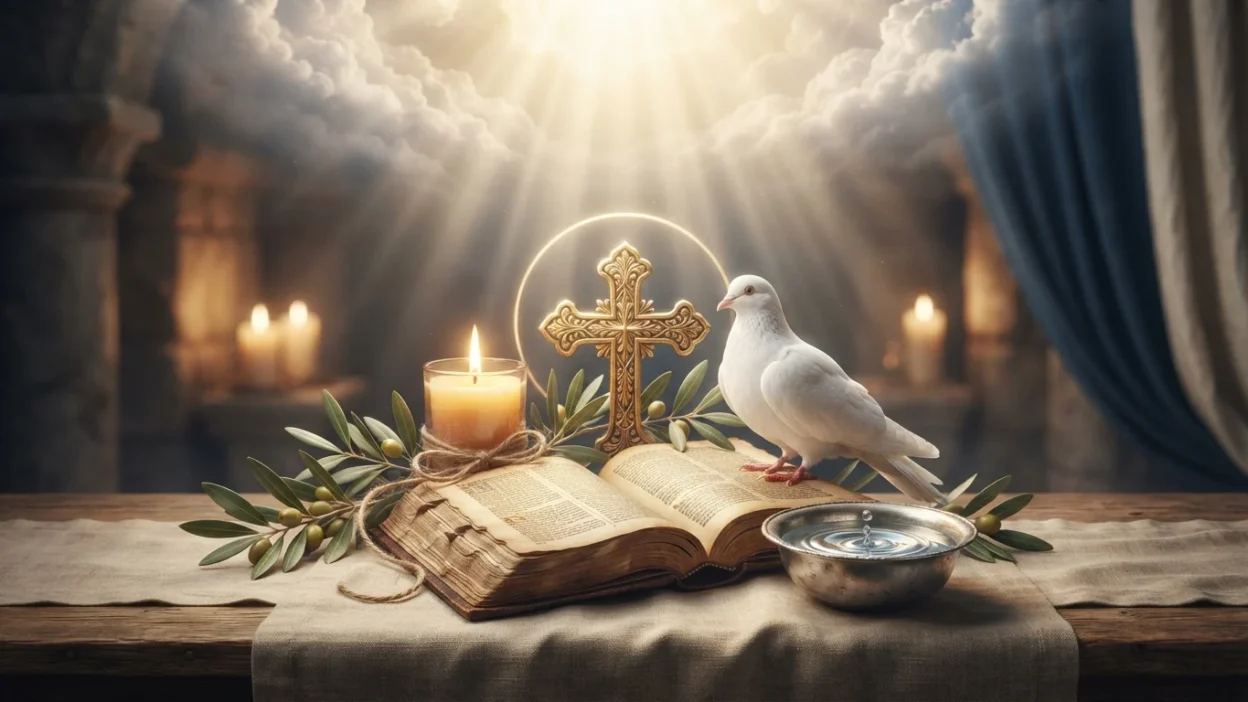
Holy symbolism refers to the use of sacred objects, images, places, colors, actions, and ideas to express a connection with the divine. Across religions and cultures, holy symbolism helps people understand spiritual truths that may be difficult to communicate through ordinary language.
From light and water to temples, sacred clothing, religious symbols, and rituals, holy symbolism gives visible form to faith, devotion, purity, protection, and divine presence. Understanding these symbols can offer a deeper appreciation of religious traditions as well as the personal meanings people attach to spirituality.
Holy Symbolism Meaning (Clear Definition)
Holy symbolism is the use of sacred signs, objects, images, or practices to represent divine qualities, spiritual beliefs, religious truths, or a relationship with the sacred.
A holy symbol does not always have one universal meaning. Its interpretation can depend on the religion, culture, historical period, and personal beliefs surrounding it.
Common meanings associated with holy symbolism include:
| Holy SymbolCommon Symbolic Meaning | |
|---|---|
| Light | Divine presence, truth, hope, enlightenment |
| Water | Purification, renewal, spiritual cleansing |
| Fire | Divine power, transformation, purification |
| White | Purity, innocence, holiness |
| Circle | Eternity, wholeness, infinity |
| Dove | Peace, purity, divine spirit |
| Cross | Faith, sacrifice, redemption, Christianity |
| Sacred temple | Worship, divine presence, spiritual community |
Holy symbolism often works through familiar images. For example, light can suggest truth because it allows people to see clearly, while darkness may represent mystery, uncertainty, or the unknown.
In this way, symbolism creates a bridge between the physical world and spiritual ideas.
What Does Holy Symbolism Represent?
Holy symbolism can represent many dimensions of religious and spiritual experience. Some symbols communicate specific teachings, while others create an emotional connection with something considered sacred.
Purity and Holiness
Purity is one of the most common themes in sacred symbolism. White clothing, clean water, bright light, and unblemished objects can symbolize spiritual cleanliness and moral integrity.
The idea of purity may refer to the heart, mind, actions, intentions, or relationship with the divine.
Divine Presence
Some holy symbols represent the presence of God or another sacred power. Religious buildings, altars, sacred texts, candles, incense, and ceremonial objects can help believers focus their attention on the divine.
These objects may not be considered divine themselves. Instead, they can serve as reminders of something greater than the physical world.
Protection and Guidance
Holy symbolism is also frequently connected with spiritual protection and guidance.
Sacred inscriptions, religious emblems, prayer beads, protective garments, and devotional objects have been used in different traditions as reminders of faith and sources of comfort.
Sacrifice and Redemption
Many religious traditions use symbolism to communicate ideas of sacrifice, suffering, forgiveness, and renewal.
A symbol may therefore represent not only pain or loss but also transformation and the possibility of spiritual restoration.
Eternal Life
Circles, stars, heavenly imagery, rising light, and other forms may represent eternity or life beyond physical existence.
This symbolism reflects the human desire to understand mortality and what may lie beyond it.
Spiritual Meaning of Holy Symbolism
The spiritual meaning of holy symbolism often centers on the relationship between human beings and the sacred.
A holy symbol can encourage reflection, prayer, gratitude, humility, or inner transformation. Rather than simply decorating a religious space, it can help direct attention toward spiritual values.
Connection With the Divine
Sacred symbolism can remind people that life may have a dimension beyond material experience. A simple candle, prayer gesture, or religious image can become a focal point for contemplation.
Inner Transformation
Many sacred symbols suggest change. Water can represent cleansing, fire can represent purification, and light can represent awakening or understanding.
Together, these ideas communicate the possibility of becoming spiritually renewed.
Faith and Trust
Holy symbolism can also represent trust in something greater than oneself. Religious symbols often remain meaningful during difficult periods because they remind believers of their faith, values, community, and spiritual commitments.
Mystery
Not every sacred symbol has a completely fixed explanation. Mystery itself can be an important part of spirituality.
A symbol may invite contemplation rather than provide a simple answer, allowing individuals to discover personal meaning through reflection and experience.
Biblical / Religious Meaning of Holy Symbolism
Holy symbolism has an important role in the Bible and in many other religious traditions. Biblical imagery frequently uses physical elements to communicate spiritual concepts.
Its symbolic power comes partly from its ability to illuminate what is hidden. In religious thought, this can represent spiritual understanding and movement away from ignorance.
Water
Water can symbolize cleansing, life, renewal, and transformation.
Because water is essential for physical life and can also wash away dirt, it naturally became a powerful image for spiritual purification.
Fire
Fire often carries associations with divine power, purification, judgment, and transformation.
Its dual nature is especially significant: fire can provide warmth and light, but it can also destroy. This makes it a powerful symbol of both divine presence and spiritual testing.
Oil
In biblical and religious contexts, oil can symbolize blessing, consecration, healing, abundance, or spiritual appointment.
Its use in anointing traditions demonstrates how an ordinary substance can become connected with sacred purpose.
The Cross
Within Christianity, the cross is one of the most recognizable holy symbols. It is associated with the crucifixion of Jesus Christ and commonly represents sacrifice, redemption, faith, suffering, and hope.
Its meaning extends beyond an historical object because it has become a central expression of Christian belief.
Religious symbolism should always be interpreted within its specific tradition. A symbol can have different meanings in different faiths, and its significance may also change across historical periods.
Holy Symbolism in History and Culture
Holy symbolism has existed throughout human history. Ancient civilizations used sacred images, architecture, animals, celestial bodies, colors, plants, and ceremonial objects to express beliefs about gods, nature, death, creation, and the afterlife.
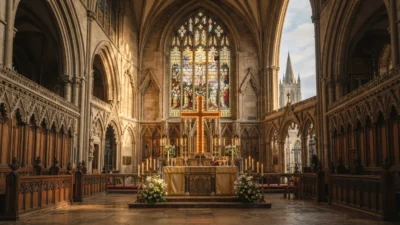
Temples and shrines were often designed to distinguish sacred space from ordinary space. Their entrances, heights, orientations, decorations, and ritual areas could all communicate ideas about the relationship between humans and the divine.
Ancient Sacred Symbols
Ancient cultures frequently connected natural phenomena with spiritual meaning.
The sun could represent life and divine power. The moon could symbolize cycles and mystery. Mountains could represent closeness to heaven, while rivers could represent life and renewal.
Animals also carried symbolic meanings. Birds might suggest freedom or a connection with the heavens, while lions could represent strength and authority.
Sacred Architecture
Religious architecture demonstrates how holy symbolism can become part of the physical environment.
Domes, towers, arches, gardens, stained glass, statues, geometric patterns, and sacred orientations can all contribute to an atmosphere of reverence.
A building can therefore communicate spiritual ideas even before a person understands its written teachings.
Ritual and Sacred Objects
Holy symbolism also appears through ritual.
Candles, incense, prayer beads, ceremonial clothing, sacred books, bells, vessels, and offerings may all become meaningful because of the actions and beliefs surrounding them.
Their importance often comes not merely from the physical object but from the religious tradition that gives the object its symbolic role.
Holy Symbolism in Literature and Art
Artists and writers have long used holy symbolism to explore faith, morality, suffering, death, hope, temptation, redemption, and transcendence.
Religious art often communicates ideas through visual symbols rather than words alone.
A halo may indicate holiness. A ray of light may suggest divine revelation. A garden may represent innocence or paradise. A journey may represent spiritual growth.
In literature, holy symbolism can be more subtle. A character may encounter water at a moment of personal transformation, enter a sacred place during a crisis, or experience light after a period of darkness.
These images can operate on several levels at once.
For example, a candle in a story might be a literal source of light while also representing hope, faith, memory, or the survival of goodness during difficult circumstances.
Because symbolism is often open to interpretation, readers may discover meanings that differ from the author’s intended symbolism. Context remains essential when interpreting sacred imagery.
Dream Meaning of Holy Symbolism
Dreams involving holy symbolism can feel especially powerful because sacred images often carry emotional and personal associations.
A dream featuring a holy place, religious object, light, angelic figure, prayer, or sacred ceremony may symbolize a search for guidance, peace, protection, meaning, or emotional renewal.
Possible interpretations include:
- Seeing a holy place: A desire for peace, security, reflection, or spiritual direction.
- Seeing bright light: Hope, clarity, awakening, or a new understanding.
- Praying in a dream: A need for reassurance, guidance, forgiveness, or inner strength.
- Seeing a sacred object: Connection with personal beliefs, family traditions, or important values.
- Entering a temple or church: A search for belonging, meaning, protection, or answers.
- Holy water: Emotional cleansing, renewal, healing, or a fresh beginning.
Dream symbolism is highly personal. A symbol that represents comfort to one person may represent fear, conflict, or uncertainty to another.
Rather than treating one interpretation as universally correct, consider the emotions, circumstances, relationships, and beliefs connected with the dream.
Modern Meaning of Holy Symbolism
In modern life, holy symbolism continues to influence religion, art, architecture, fashion, film, literature, ceremonies, and personal identity.
People may wear religious jewelry, display sacred artwork, light candles, keep meaningful objects in private spaces, or use traditional symbols during important life events.
Holy symbolism can also appear outside formal religious settings.
For some people, a particular symbol represents family heritage. For others, it represents resilience, peace, morality, hope, or personal transformation.
Modern interpretations can therefore be both religious and personal.
At the same time, sacred symbols should be approached respectfully. Symbols belonging to a particular religious or cultural tradition may carry deep historical significance that should not be reduced to decoration or trends.
Why Is Holy Symbolism Important?
Holy symbolism matters because human beings often use images and objects to communicate ideas that are difficult to express directly.
A symbol can condense a complex spiritual concept into a recognizable form.
For example, a single candle can evoke ideas of hope, remembrance, prayer, guidance, and divine light. A small religious emblem may represent an entire tradition and a person’s relationship with it.
Holy symbolism also creates continuity between generations. Sacred objects and rituals can preserve memories, beliefs, values, and cultural traditions over centuries.
Common Themes in Holy Symbolism
Although sacred meanings vary widely, several themes appear repeatedly across religious and cultural traditions:
- Purity — spiritual cleanliness and moral integrity
- Light — truth, wisdom, hope, and divine presence
- Water — cleansing, renewal, life, and transformation
- Fire — power, purification, judgment, and change
- Sacred space — separation from ordinary life and connection with worship
- Protection — faith, spiritual security, and divine care
- Sacrifice — devotion, suffering, service, and redemption
- Eternity — immortality, divine existence, and life beyond death
These themes demonstrate why symbolism remains such a powerful part of spiritual expression.
Frequently Asked Questions About Holy Symbolism
What is the main meaning of holy symbolism?
Holy symbolism uses sacred images, objects, actions, and places to represent divine ideas, spiritual values, religious teachings, or a connection with the sacred.
What are common examples of holy symbolism?
Common examples include light, water, fire, crosses, sacred texts, religious clothing, temples, candles, prayer beads, doves, and other faith-specific symbols.
What does holy symbolism mean spiritually?
Spiritually, holy symbolism can represent faith, purity, divine presence, protection, guidance, transformation, hope, and the search for deeper meaning.
Why is holy symbolism important in religion?
Holy symbolism makes abstract spiritual ideas easier to understand, remember, experience, and communicate. It also helps preserve religious traditions and connect communities with their history.
What does seeing holy symbols in dreams mean?
Dreaming about holy symbols may reflect a desire for guidance, peace, protection, renewal, or spiritual understanding. The meaning depends strongly on the dreamer’s personal beliefs and emotions.
Conclusion
Holy symbolism gives visible form to invisible ideas. Through light, water, sacred objects, religious imagery, rituals, and holy spaces, people express concepts such as faith, purity, hope, sacrifice, protection, and divine presence.
Its deepest meaning often comes from the connection between the symbol and the person who encounters it. Whether found in religion, history, art, dreams, or everyday life, holy symbolism invites us to look beyond the surface and consider what we hold sacred.