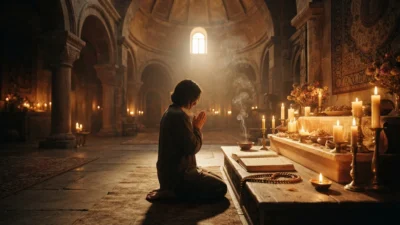

Temple symbolism gives physical form to spiritual ideas. Across religions and cultures, temples have been designed to represent sacred space, divine presence, spiritual order, protection, transformation, and the human search for something greater than everyday life.
From towering entrances and sacred geometry to statues, water, light, incense, and ceremonial spaces, every feature can carry meaning. Understanding temple symbolism helps us see temples not simply as buildings, but as carefully created environments that connect architecture with faith and spiritual experience.
Temple Symbolism Meaning (Clear Definition)
Temple symbolism is the use of architecture, objects, images, spaces, natural elements, and rituals within a temple to express religious and spiritual beliefs.
A temple may symbolize a meeting point between the human and divine worlds. Its design can guide visitors from an ordinary environment into a space associated with worship, contemplation, transformation, or sacred presence.
Temple symbolism differs considerably between traditions. A Hindu temple, Buddhist temple, ancient Egyptian temple, Jewish Temple tradition, or other sacred structure may use completely different symbols while sharing themes such as reverence, order, transcendence, and connection with the divine.
| Temple ElementCommon Symbolic Meaning | |
|---|---|
| Entrance or gateway | Transition from ordinary to sacred space |
| Tower or dome | Heaven, divine connection, spiritual ascent |
| Light | Divine presence, wisdom, enlightenment |
| Water | Purification, renewal, life |
| Sacred statue | Divine qualities, spiritual teaching, devotion |
| Circle | Eternity, unity, completeness |
| Sacred geometry | Cosmic order, balance, harmony |
| Garden | Paradise, life, peace, spiritual renewal |
| Altar or shrine | Devotion, offering, sacred presence |
| Incense | Prayer, purification, transcendence |
These meanings are general rather than universal. The precise symbolism of a temple should always be understood within its religious and cultural context.
What Does Temple Symbolism Represent?
Temple symbolism can represent several major spiritual ideas.
Sacred Space
One of the central meanings of a temple is the distinction between sacred and ordinary space.
Passing through a gateway, courtyard, staircase, or series of chambers can create a gradual transition away from everyday life and toward contemplation.
Divine Presence
Many temples are designed around a central sacred image, shrine, sanctuary, or ritual area.
This focal point may represent the presence of a deity, divine reality, sacred teaching, or spiritual truth, depending on the tradition.
Spiritual Ascent
Tall towers, mountains, domes, stairways, and upward-pointing architectural forms can symbolize movement toward heaven or higher spiritual awareness.
The physical act of looking upward can reinforce this symbolic idea.
Purification
Water, fountains, pools, bathing areas, and ritual cleansing spaces frequently appear in sacred architecture.
Water naturally symbolizes cleansing, renewal, life, and preparation for entering sacred space.
Cosmic Order
Sacred geometry and carefully planned layouts can represent harmony between the human world and the larger universe.
A temple may be organized around particular directions, proportions, numbers, or geometric forms because these patterns hold religious significance within a specific tradition.
Spiritual Meaning of Temple Symbolism
The spiritual meaning of temple symbolism often centers on transformation.
A temple can be understood as a place where the individual temporarily steps away from ordinary concerns and turns inward toward prayer, meditation, devotion, or contemplation.
Inner Peace
Quiet courtyards, gardens, water features, incense, and controlled movement can create an atmosphere of stillness.
This physical environment can encourage people to slow down and become more attentive to their thoughts and surroundings.
Connection With the Divine
Temple spaces often direct attention toward a sacred focal point.
Whether that focus is a statue, shrine, altar, sacred text, empty sanctuary, or architectural feature, the arrangement can help visitors contemplate a spiritual reality greater than themselves.
Transformation
Entering a temple can symbolize leaving behind ordinary concerns and entering a different state of awareness.
The journey through the building may therefore represent an inner journey from distraction toward clarity, devotion, wisdom, or peace.
Balance and Harmony
Temple architecture frequently uses symmetry, proportion, repetition, and geometric patterns.
These elements can communicate ideas of balance and harmony, suggesting that spiritual life involves bringing different parts of existence into greater order.
Biblical / Religious Meaning of Temple Symbolism
The concept of the temple has deep significance in several religious traditions.
In the biblical tradition, the Temple in Jerusalem was a central place of worship and carried profound theological meaning. It represented sacred worship, divine presence, sacrifice, covenant, and the religious identity of ancient Israel.
The Temple of Solomon, described in the Hebrew Bible, became one of the most important sacred structures in biblical history.
The Temple as Sacred Dwelling
Biblical temple traditions connected the sanctuary with the presence of God.
The sacred space was not simply an ordinary building. Its organization and rituals communicated distinctions between holy and common areas.
The Holy of Holies
The Holy of Holies represented the most sacred area of the ancient Jerusalem Temple.
Its restricted access emphasized the holiness of God’s presence and the separation between sacred and ordinary realms.
Temple Symbolism in Christianity
Christian interpretations of temple imagery developed in different ways.
The New Testament uses temple language in connection with worship, the body, the community of believers, and the presence of God.
As Christianity developed, churches also adopted architectural ideas that expressed sacred space, although Christian traditions differ greatly in how they understand temples and churches.
Temple Symbolism in Other Religions
Temples play major roles in traditions including Hinduism, Buddhism, Jainism, Sikh history and architecture in certain contexts, and several ancient religions.
The symbols and beliefs differ, but temples commonly provide spaces for worship, meditation, offerings, ritual, community, and encounters with the sacred.
Temple Symbolism in History and Culture
Temples have existed for thousands of years and are among humanity’s most enduring architectural expressions of religious belief.
Ancient temples were often positioned carefully within landscapes and cities. Their orientation, proportions, entrances, columns, sculptures, and ceremonial spaces could all carry symbolic meaning.
Ancient Egyptian Temples
Ancient Egyptian temples often represented relationships between the gods, the king, the natural world, and cosmic order.
Monumental gateways, columns, courtyards, sanctuaries, and sacred images created a carefully controlled progression through the temple.
Greek and Roman Temples
Classical temples emphasized proportion, symmetry, columns, elevated platforms, and carefully ordered architectural forms.
Their structures expressed ideas of beauty, order, permanence, and reverence for particular deities.
Hindu Temple Symbolism
Hindu temple architecture contains rich symbolic traditions.
The temple can represent the cosmos, while its central sanctuary may represent the spiritual center of existence. Towers, sculptures, gateways, mandalas, and sacred proportions can communicate complex theological ideas.
Buddhist Temple Symbolism
Buddhist temples vary widely across cultures, but many incorporate features associated with meditation, enlightenment, compassion, wisdom, and the path toward liberation.
Stupas, statues of the Buddha, lotus imagery, prayer spaces, gardens, and carefully arranged pathways can all carry symbolic meaning.
Sacred Landscapes
Temples are sometimes designed in relationship with mountains, rivers, forests, gardens, or other natural features.
Nature itself may become part of the sacred experience, reinforcing the idea that spiritual life is connected with the larger world.
Temple Symbolism in Literature and Art
Temples have long served as powerful symbols in literature, painting, sculpture, poetry, film, and storytelling.
A temple may represent refuge, mystery, wisdom, spiritual authority, hidden knowledge, or a character’s search for meaning.
Temple as a Journey
A character entering a temple can symbolize the beginning of an inner journey.
The physical movement through gates, corridors, stairways, and chambers may mirror psychological or spiritual transformation.
Temple as Mystery
A hidden temple or ancient sanctuary often represents knowledge that has been forgotten or concealed.
Writers may use this image to explore questions about identity, history, faith, or human limitations.
Temple as Sanctuary
A temple can also symbolize safety and peace.
In stories, characters may seek sacred places when they are facing danger, grief, confusion, or moral uncertainty.
Light and Shadow
Artists often use light inside temples to create dramatic contrasts.
A narrow beam illuminating a sacred statue can suggest revelation, while shadowed chambers may symbolize mystery, the unknown, or truths that have not yet been discovered.
Dream Meaning of Temple Symbolism
Dreams about temples can carry powerful symbolic meanings because temples are commonly associated with spirituality, reflection, mystery, and sacred experiences.
Possible interpretations include:
- Entering a temple: Beginning a period of self-discovery or seeking spiritual guidance.
- Praying in a temple: Desire for peace, answers, protection, or emotional support.
- Seeing a beautiful temple: Inner harmony, hope, inspiration, or admiration for spiritual values.
- An abandoned temple: Forgotten beliefs, unresolved memories, lost traditions, or a neglected part of the self.
- Climbing temple steps: Personal growth, ambition, spiritual development, or progress.
- Finding a hidden temple: Discovering an important truth, ability, memory, or aspect of oneself.
- A damaged temple: Spiritual uncertainty, emotional conflict, or changing beliefs.
Dream interpretation is personal rather than universal. The feelings experienced in the dream can be more revealing than the temple itself.
Modern Meaning of Temple Symbolism
In modern society, temples continue to function as places of worship, meditation, community, cultural preservation, and spiritual education.
They can also serve as important architectural and historical landmarks.
Modern visitors may experience a temple as a religious site, an artistic environment, a place of quiet reflection, or a connection to family and cultural heritage.
Temple symbolism also appears beyond physical temples. Modern architecture, meditation spaces, gardens, memorials, and spiritual artwork may borrow ideas such as sacred geometry, natural harmony, water, light, and intentional movement.
The continuing appeal of these elements suggests that people still respond strongly to spaces that create a sense of meaning and separation from ordinary life.
Common Symbols Found in Temples
Although traditions differ, several symbolic elements appear frequently across sacred architecture:
- Gateway: Marks the transition into sacred space.
- Stairway: Can represent spiritual ascent or progress.
- Water: Suggests cleansing, life, and renewal.
- Lotus: Often represents purity, awakening, and spiritual growth in several Asian traditions.
- Light: Represents wisdom, truth, divine presence, or enlightenment.
- Incense: Can symbolize purification, devotion, or prayer.
- Sacred geometry: Represents harmony, order, and cosmic structure.
- Mountain imagery: Can suggest spiritual elevation and closeness to the divine.
- Garden: May represent paradise, peace, life, or sacred nature.
- Central shrine: Provides a focal point for worship or contemplation.
Why Is Temple Symbolism Important?
Temple symbolism matters because it transforms architecture into a form of spiritual communication.
A doorway can represent transition. A staircase can suggest ascent. Water can represent renewal. Light can symbolize wisdom. A central sanctuary can represent the heart of spiritual life.
Together, these elements create an experience that engages the body, mind, emotions, and imagination.
Temples also preserve cultural memory. Their architecture and rituals can carry traditions across generations, allowing people to remain connected with beliefs and practices that have shaped their communities for centuries.
Frequently Asked Questions About Temple Symbolism
What is the main meaning of temple symbolism?
Temple symbolism uses architecture, sacred objects, images, natural elements, and rituals to communicate religious and spiritual ideas. Common themes include divine presence, purification, transformation, harmony, and spiritual connection.
What does a temple symbolize spiritually?
A temple can symbolize a sacred meeting place between the human and divine worlds. It may also represent inner peace, spiritual growth, meditation, devotion, and transformation.
Why are temples designed with sacred geometry?
Sacred geometry can express ideas of balance, harmony, cosmic order, and spiritual structure. Specific meanings depend on the religious tradition and architectural system involved.
What does dreaming about a temple mean?
Dreaming about a temple may symbolize spiritual searching, self-discovery, guidance, peace, or a desire for deeper meaning. The dreamer’s emotions and personal beliefs strongly influence the interpretation.
What does a temple symbolize in different cultures?
Temples can represent worship, divine presence, cosmic order, community, meditation, protection, or spiritual transformation. Their exact symbolism varies significantly across religions and cultures.
Conclusion
Temple symbolism reveals how architecture can become a language of spirituality. Through sacred geometry, gateways, water, light, statues, gardens, towers, and sanctuaries, temples express ideas that reach far beyond their physical structures.
At their deepest level, temples symbolize humanity’s enduring search for connection, meaning, peace, and the sacred. They remind us that a carefully created space can influence not only where we stand, but also how we see ourselves and the world around us.

Miles Arthur is a passionate content writer at Symblosim.com, specializing in symbol meanings, cultural symbolism, spiritual interpretations, and historical signs. He creates informative articles that help readers understand the deeper significance of symbols.